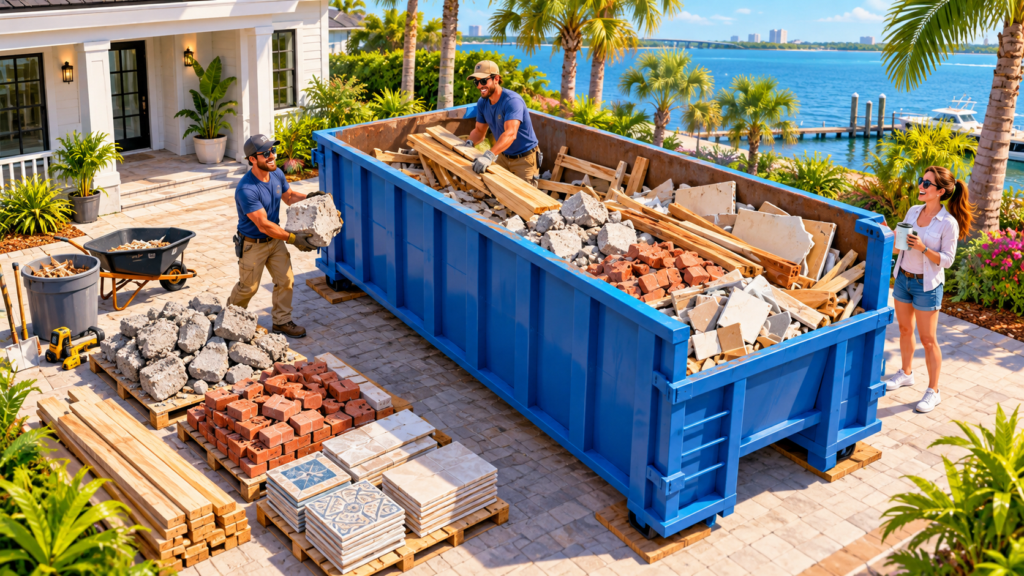
Home renovation projects have an exciting side: new kitchens, updated bathrooms, fresh flooring, expanded living spaces, and a home that finally works the way you want it to.
Then there is the less exciting side.
Old cabinets. Broken drywall. Flooring. Tile. Lumber. Fixtures. Countertops. Packaging. Trim. Doors. And a growing pile of debris that somehow looks much larger after it has been removed from the house.
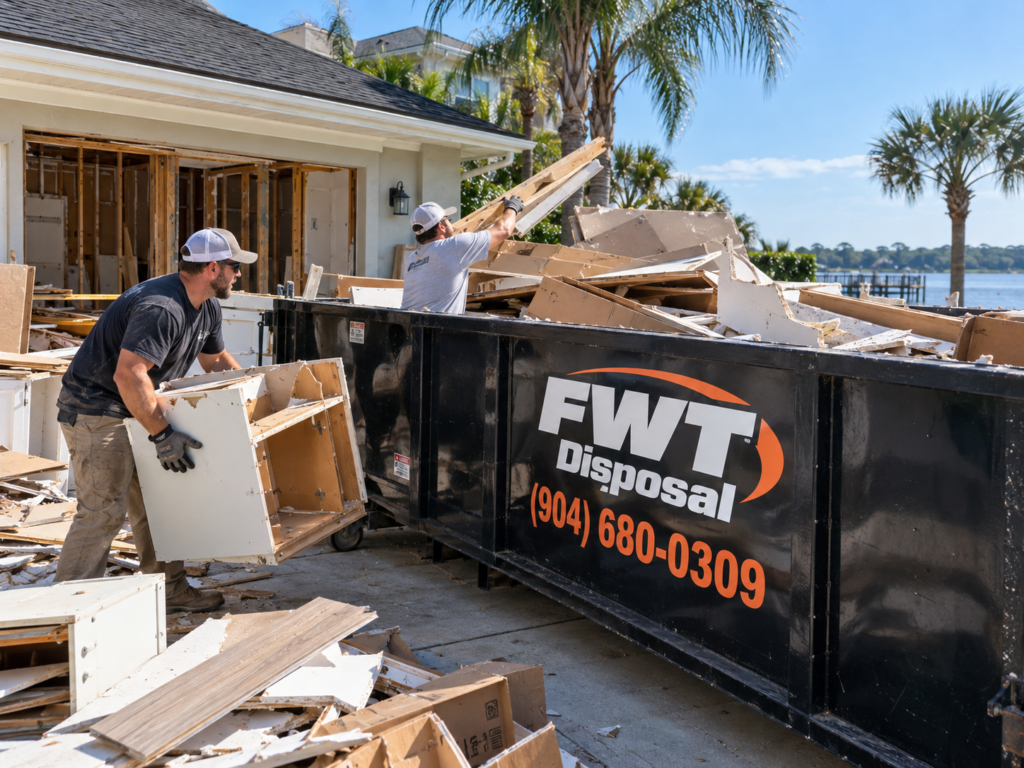
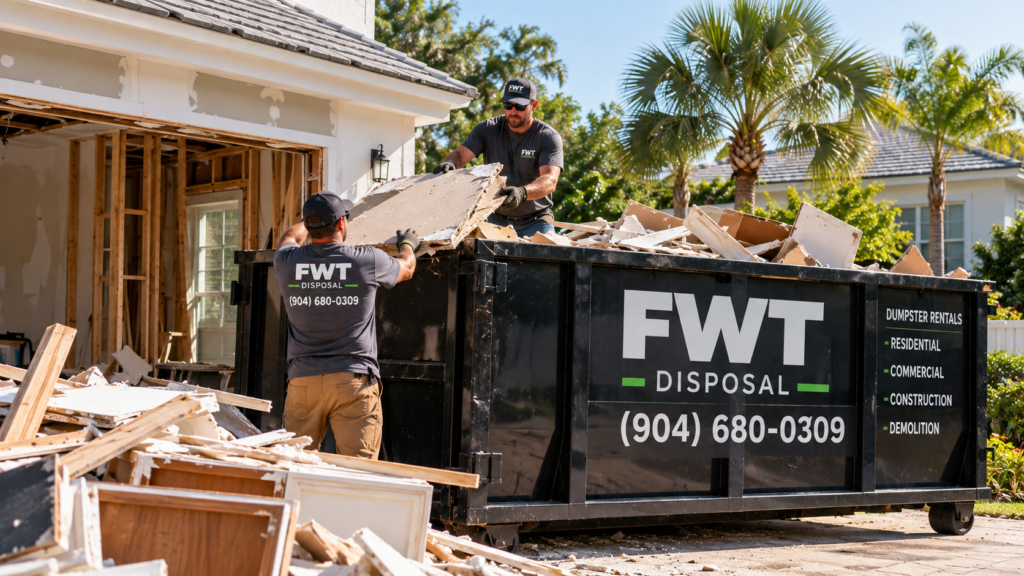
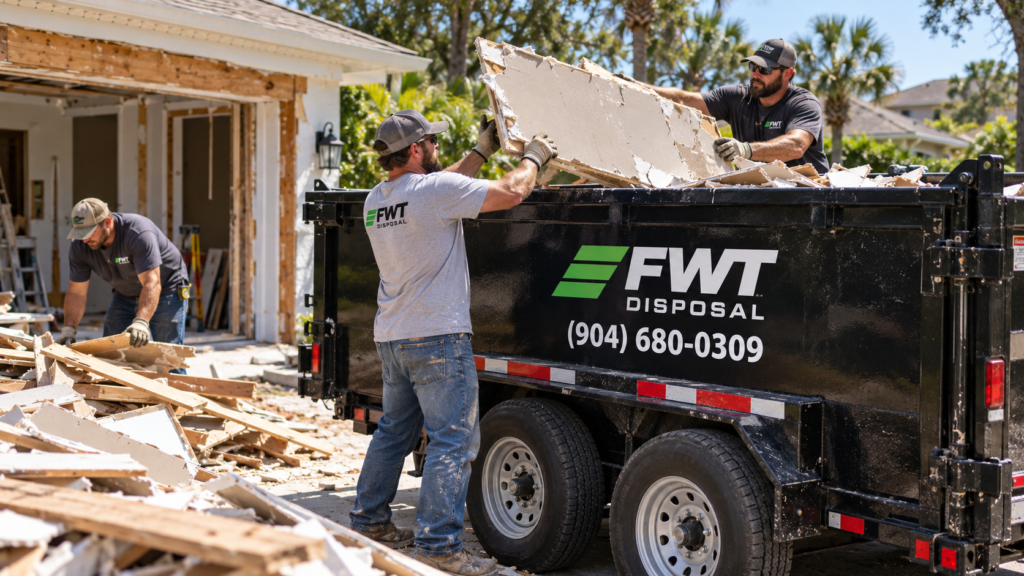
A dumpster rental for home renovation gives homeowners and contractors a simple way to manage that debris throughout the project instead of waiting until the end to figure out where everything will go.
The dumpster is delivered directly to the property, renovation waste can be loaded as work progresses, and the container is removed when the cleanup is complete.
For homeowners throughout Northeast Florida, planning a dumpster rental for home renovation before demolition begins can make the entire remodeling process more organized.
This guide explains when a renovation dumpster makes sense, what size you may need, which materials are commonly generated, and what to consider before scheduling delivery.
Why Use a Dumpster Rental for Home Renovation?
Renovation debris adds up much faster than most homeowners expect.
Before demolition, a kitchen looks like one room with cabinets, counters, appliances, flooring, and drywall.
After demolition, those same materials become dozens or hundreds of individual pieces that must be stored, moved, and eventually disposed of.
A dumpster rental for home renovation provides one designated place for that debris.
Instead of:
- Stacking waste in the garage
- Creating piles in the driveway
- Filling regular garbage bins
- Loading a pickup truck repeatedly
- Making multiple disposal trips
you can place approved renovation debris directly into the dumpster as the project progresses.
That can make the cleanup process much easier for both DIY homeowners and professional contractors.
What Types of Renovations Need a Dumpster?
Not every small repair requires a roll-off dumpster.
Replacing a faucet or painting a bedroom probably does not.
But once a project involves demolition, a dumpster becomes much more useful.
A dumpster rental for home renovation may make sense for:
- Kitchen remodeling
- Bathroom remodeling
- Flooring replacement
- Whole-house renovation
- Basement or garage remodeling
- Deck removal
- Home additions
- Roof replacement
- Window and door replacement
- Interior demolition
- Exterior renovation
- Rental-property rehabilitation
The more material being removed, the more valuable it becomes to have a disposal plan before work begins.
Dumpster Rental for Kitchen Remodeling
Kitchen remodels are among the most debris-heavy home improvement projects.
Even a relatively small kitchen renovation may involve removing:
- Cabinets
- Countertops
- Backsplash
- Flooring
- Drywall
- Fixtures
- Trim
- Shelving
- Packaging
- Old building materials
Cabinets are especially bulky.
Once removed, they take up much more room than homeowners expect unless they are broken down before loading.
Countertops can also create special considerations.
Laminate countertops are relatively light, while stone, concrete, and tile surfaces are much heavier.
For many kitchen projects, a dumpster rental for home renovation allows demolition waste to leave the work area immediately instead of accumulating inside the house.
What Size Dumpster for a Kitchen Remodel?
The right size depends on how extensive the kitchen renovation will be.
Small Kitchen Update
If you’re removing only cabinets, flooring, or a small amount of material, a 10- or 15-yard dumpster may be enough.
Full Kitchen Remodel
A renovation involving cabinets, countertops, flooring, drywall, fixtures, and other materials may be better suited to a 15- or 20-yard dumpster.
Kitchen Plus Additional Rooms
If the kitchen is only one part of a larger renovation, a 20- or 30-yard container may make more sense.
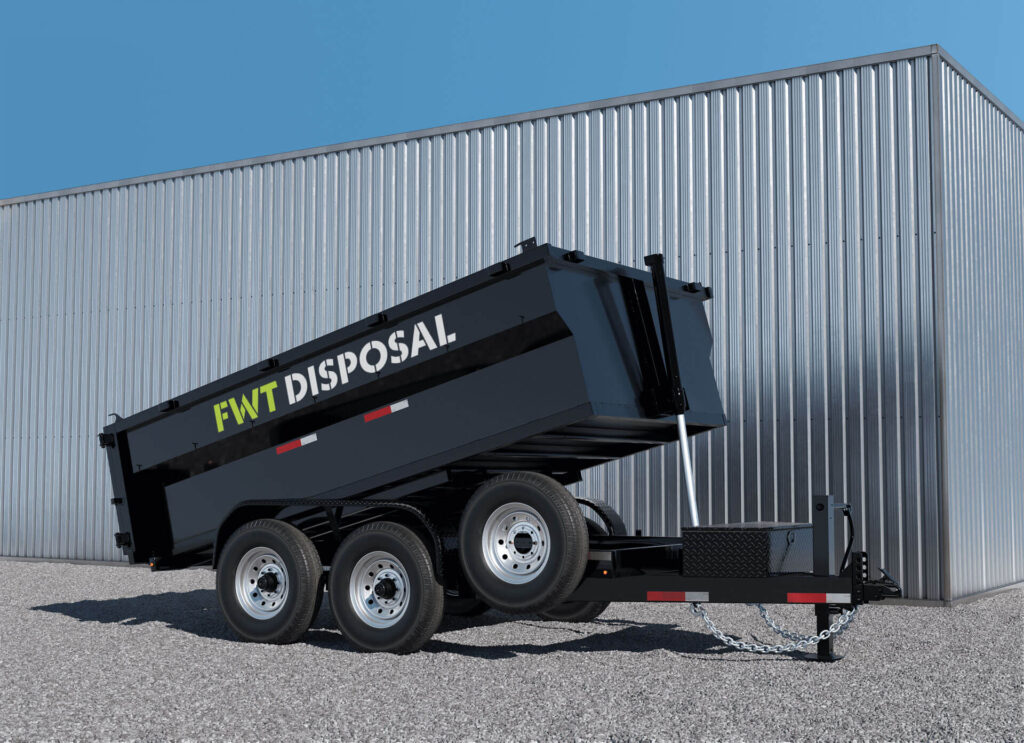
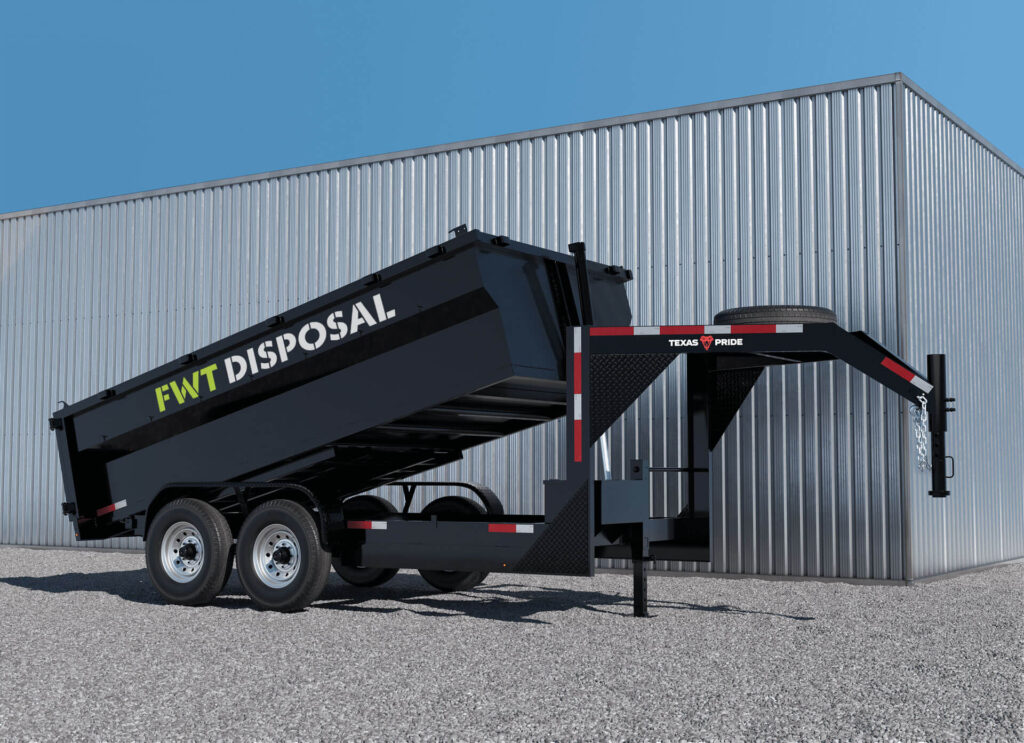
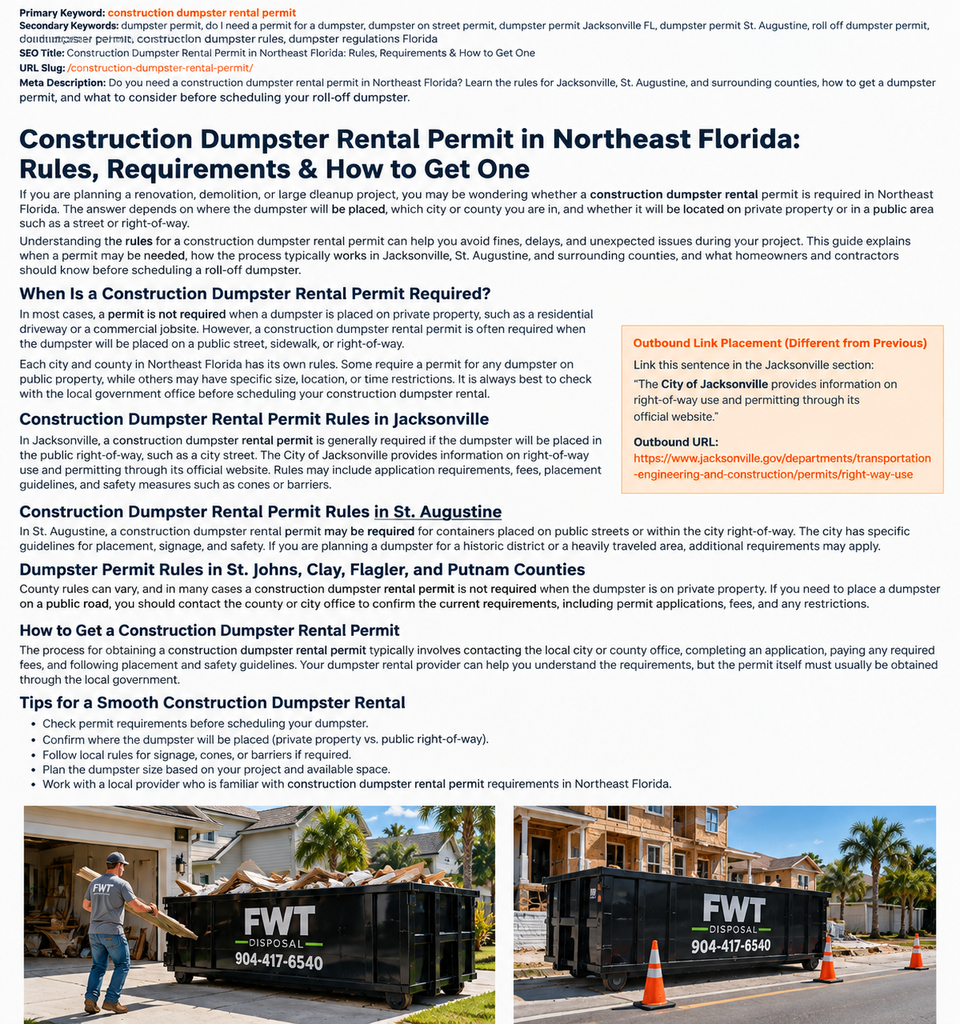
FWT currently offers 10-, 15-, 20-, 30-, and 40-yard roll-off dumpsters, with its 20-yard option positioned for renovations and larger cleanouts and its 30-yard option for major remodels.
Dumpster Rental for Bathroom Remodeling
Bathrooms are physically smaller than kitchens, but they can generate surprisingly heavy debris.
A bathroom renovation may involve:
- Vanity
- Bathtub
- Shower enclosure
- Drywall
- Tile
- Cement board
- Flooring
- Fixtures
- Cabinets
- Countertops
- Plumbing-related materials
Tile, mortar, cement board, and stone can significantly increase the weight of the load.
That means a smaller dumpster may provide enough physical volume while still requiring careful attention to weight.
For many bathroom renovations, a 10- or 15-yard home renovation dumpster can be a practical starting point.
If multiple bathrooms are being renovated at once, a larger container may be more appropriate.
Dumpster Rental for Flooring Replacement
Replacing flooring throughout a home can generate substantial debris.
The amount and weight depend heavily on the material.
Carpet
Carpet and padding are bulky but generally lighter than tile.
Laminate and Vinyl
These materials can occupy significant dumpster space, especially when removed from several rooms.
Hardwood
Hardwood flooring adds more weight while still consuming considerable volume.
Ceramic or Porcelain Tile
Tile is dense and heavy.
Once combined with mortar, grout, and cement board, even a moderate flooring project can produce a substantial load.
A dumpster rental for home renovation involving flooring should therefore consider both square footage and material type.
Dumpster Rental for Whole-House Remodeling
Whole-home renovations create one of the strongest cases for having a dumpster onsite.
Debris may come from nearly every part of the house:
- Kitchens
- Bathrooms
- Bedrooms
- Flooring
- Drywall
- Closets
- Doors
- Trim
- Cabinets
- Fixtures
- Interior walls
For these projects, a 30-yard dumpster may be worth considering.
Very large renovations may justify a 40-yard container or multiple pickups.
A whole-house remodeling dumpster rental also allows different trades to use the same designated debris area throughout the project.
Carpenters, flooring installers, drywall crews, and demolition teams all know where approved waste should go.
Dumpster Rental for Home Additions
Building an addition produces both demolition debris and new construction waste.
The project may generate:
- Existing siding
- Roofing
- Drywall
- Lumber
- Sheathing
- Flooring
- Packaging
- Trim
- Construction scraps
Because the project can last longer than a simple remodel, scheduling becomes important.
A dumpster rental for home renovation may need to remain onsite through several phases or be swapped once full.
Discuss project duration and expected debris with the provider before ordering.
Dumpster Rental for Deck Removal
Deck demolition can create large amounts of bulky lumber.
Materials may include:
- Deck boards
- Railings
- Posts
- Stairs
- Fasteners
- Framing
- Concrete footings
Small decks may fit into a 10- or 15-yard dumpster.
Larger decks may require a 20-yard container.
If concrete footings are also being removed, mention them before choosing the dumpster because concrete can significantly change the load weight.
Dumpster Rental for Garage Renovation
Garages often combine renovation debris with general cleanout waste.
A garage project might include:
- Shelving
- Cabinets
- Drywall
- Flooring
- Lumber
- Doors
- Old storage
- Household junk
That makes a renovation dumpster rental especially useful because the project may involve both construction materials and unwanted household items.
Before mixing different materials, confirm that everything is acceptable for the dumpster.
DIY Remodel vs Contractor Remodel
Both DIY homeowners and professional contractors can benefit from a dumpster rental for home renovation, but they may use the dumpster differently.
DIY Home Renovation
DIY projects often move more slowly.
A homeowner may demolish one section on Saturday, continue work the following weekend, and gradually fill the container.
Having the dumpster onsite can reduce the pressure to complete cleanup immediately.
Contractor Remodeling
Contractors may generate large volumes of debris very quickly.
Demolition crews can remove an entire kitchen or several rooms in a single day.
For contractor-led projects, delivery and pickup timing can become part of the overall construction schedule.
What Can Go in a Home Renovation Dumpster?
Common renovation debris may include:
- Wood
- Lumber
- Drywall
- Cabinets
- Flooring
- Tile
- Doors
- Trim
- Siding
- Roofing materials
- Packaging
- Fixtures
- Approved construction debris
However, not every item removed during remodeling automatically belongs in the dumpster.
Items such as certain paints, chemicals, batteries, pressurized containers, hazardous materials, appliances, and electronics may require separate handling.
For a full material guide, see our article What Can You Put in a Construction Dumpster?
Be Careful When Renovating Older Homes
Older homes can contain materials that require more careful handling than ordinary renovation debris.
Before demolition, homeowners should consider whether the property may contain:
- Lead-based paint
- Asbestos-containing materials
- Older insulation
- Specialty coatings
- Other regulated building materials
Homes built before 1978 deserve particular attention because lead-based paint may be present.
Renovation activities such as sanding, demolition, cutting, or removing painted surfaces can create contaminated dust and debris.
Homeowners working on older properties should review HUD guidance for renovating older homes, especially when demolition may disturb painted surfaces or create large amounts of dust.
HUD’s guidance includes information on renovation work, resident protection, worksite preparation, worker protection, waste handling, and cleanup for properties where lead-based paint may be present.
This outbound source is different from every previous article in this cluster.
Should You Rent a Dumpster Before Demolition Starts?
Usually, yes.
The most convenient time for a dumpster rental for home renovation is before the first major demolition phase.
Otherwise, debris begins accumulating immediately.
Once the dumpster is onsite, waste can move directly from:
Room → driveway → dumpster
instead of:
Room → temporary pile → truck → disposal facility.
That eliminates unnecessary material handling.
Where Should the Dumpster Be Placed?
Driveways are often the most convenient location for residential renovation projects.
Before delivery, check:
- Driveway width
- Driveway length
- Parked vehicles
- Garage access
- Overhead power lines
- Trees
- Gates
- Landscaping
- Delivery truck access
You should also think about the path from the renovation area to the dumpster.
For example, if the kitchen is at the back of the house, placing the dumpster where workers can reach it efficiently may save a considerable amount of carrying.
Protecting the Driveway and Property
Dumpster placement should be discussed before delivery.
The container needs a stable location where the delivery truck can safely place and retrieve it.
Keep vehicles, tools, building materials, and other obstacles away from the delivery area.
If protecting the driveway surface is a concern, ask the rental provider about placement recommendations before delivery.
How Long Should You Rent a Dumpster for Remodeling?
The correct rental period depends on the project schedule.
A small bathroom remodel might generate nearly all of its demolition waste within a few days.
A whole-house renovation could continue for weeks.
Think about when the majority of debris will be generated.
Short Demolition Phase
If demolition happens quickly, schedule the dumpster around those days.
Ongoing Renovation
For projects generating debris throughout construction, a longer rental period or container swap may be useful.
Contractor Projects
Coordinate dumpster delivery with the contractor’s demolition schedule rather than simply the overall project start date.
The goal is to have the home renovation dumpster available when debris is actually being produced.
How Much Does a Renovation Dumpster Cost?
The cost of a dumpster rental for home renovation can depend on:
- Dumpster size
- Rental period
- Weight
- Type of debris
- Delivery location
- Additional pickups
- Disposal requirements
FWT currently advertises several roll-off sizes for Northeast Florida projects, ranging from 10-yard containers for smaller cleanups through 40-yard dumpsters for major commercial and demolition projects. Its 20-yard dumpster is positioned for renovations and larger cleanouts, while the 30-yard option is suited to construction and major remodels.
Choosing the correct size from the beginning can help avoid paying for a second container unnecessarily.
Don’t Automatically Choose the Cheapest Dumpster
A smaller dumpster may cost less initially.
But if it fills halfway through the renovation, you may need:
- Another dumpster
- An additional pickup
- A container swap
- Extra project downtime
A slightly larger remodeling dumpster rental can sometimes be more economical if it prevents an additional service.
At the same time, there is no reason to order a 40-yard dumpster for a small bathroom renovation.
The goal is to match the container to the project.
Choosing the Right Dumpster Size for Remodeling
Here is a simple starting guide:
| Project | Possible Dumpster Size |
|---|---|
| Small bathroom remodel | 10 yard |
| Small kitchen renovation | 10–15 yard |
| Full kitchen remodel | 15–20 yard |
| Flooring replacement | 10–20 yard |
| Deck removal | 10–20 yard |
| Multi-room renovation | 20–30 yard |
| Whole-house remodel | 30 yard |
| Major renovation / demolition | 30–40 yard |
These are general examples only.
The final size should account for material weight and project scope.
For a deeper comparison, see our What Size Dumpster Do I Need for Construction Debris? guide.
Heavy Renovation Materials Need Extra Planning
Not all renovation debris weighs the same.
Primarily Volume-Based Materials
These include:
- Cabinets
- Drywall
- Lumber
- Doors
- Siding
- Packaging
Heavy Materials
These include:
- Concrete
- Brick
- Tile
- Masonry
- Stone
- Roofing shingles
If your renovation includes large amounts of heavy debris, tell FWT before ordering.
A container that appears large enough based on volume may reach its allowable weight much sooner than expected.
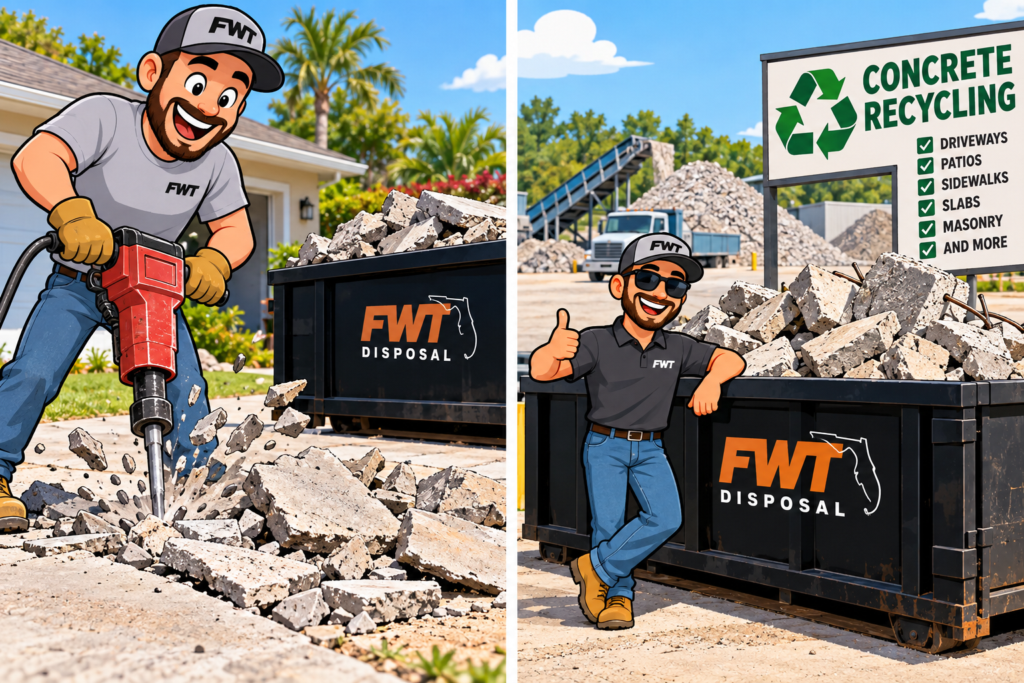
Concrete During a Home Renovation
Some remodeling projects include concrete demolition.
Examples include:
- Patio removal
- Driveway replacement
- Slab removal
- Bathroom demolition
- Masonry features
- Outdoor renovation
Concrete requires a different approach because it is so dense.
For projects involving significant concrete, see our Concrete Disposal Near Me in Northeast Florida guide.
Do not simply combine large amounts of concrete with ordinary remodeling debris without confirming the loading requirements.
Keep Renovation Debris Organized
A dumpster works best when it becomes part of the renovation workflow.
Instead of allowing debris to accumulate throughout the property, designate a clear route from the work area to the dumpster.
Workers can then remove waste continuously.
This helps prevent:
- Hallways filled with demolition material
- Garage clutter
- Driveway debris piles
- Repeated cleanup sessions
A well-planned dumpster rental for home renovation makes debris removal part of the project rather than a separate job at the end.
Break Down Bulky Items Before Loading
Cabinets, shelving, doors, and other bulky materials contain significant empty space.
Breaking them down before loading can help use the dumpster more efficiently.
For example, several intact kitchen cabinets may consume much more container space than the same cabinets disassembled into panels.
This can be particularly useful when using a 10-, 15-, or 20-yard renovation dumpster.
Avoid Overfilling the Dumpster
Do not continue stacking debris beyond the allowed fill level.
Materials sticking above the dumpster walls can create problems when the container is transported.
Instead, distribute debris evenly and make efficient use of the available space.
If the container is filling faster than expected, contact the rental provider rather than continuing to overload it.
Dumpster Rental vs Junk Removal for Remodeling
Some homeowners are unsure whether they need a dumpster or junk removal.
Both can be useful, but they solve different problems.
Dumpster Rental May Be Better When:
- You’re doing demolition yourself
- The renovation lasts several days
- Debris is generated gradually
- You have workers available to load it
- You want the container onsite
Junk Removal May Be Better When:
- Debris is already piled up
- You need someone else to load it
- The project is very small
- You want removal completed quickly
FWT offers both roll-off dumpster rental and junk removal/cleanout services for Northeast Florida customers.
Dumpster Rental for Home Renovation in Northeast Florida
FWT provides residential dumpster service for remodeling and renovation projects throughout Northeast Florida.
Its current service area includes communities across:
- Duval County
- St. Johns County
- Clay County
- Flagler County
- Putnam County
FWT’s county service pages specifically identify home renovations and remodeling among common residential dumpster uses.
Projects can range from a small bathroom renovation to a major whole-home remodel.
How to Schedule a Dumpster for Your Remodel
Step 1: Describe the Project
Instead of simply asking for a dumpster, explain what you are doing.
For example:
“Full kitchen demolition.”
“Two bathroom remodels.”
“Replacing flooring throughout the house.”
Step 2: List the Materials
Mention:
- Cabinets
- Drywall
- Flooring
- Tile
- Concrete
- Lumber
- Roofing
- Other construction debris
Step 3: Estimate the Project Size
Explain how many rooms or areas are being renovated.
Step 4: Choose the Container
FWT can help compare 10-, 15-, 20-, 30-, and 40-yard options.
Step 5: Schedule Delivery Before Demolition
Have the dumpster onsite before debris begins accumulating.
Step 6: Load Approved Materials
Keep prohibited materials separate and stay within fill and weight limits.
Step 7: Schedule Pickup
When demolition or renovation cleanup is complete, arrange removal.
Common Mistakes to Avoid With a Dumpster Rental for Home Renovation
A dumpster rental for home renovation is simple to use, but a few planning mistakes can make the process more expensive or less convenient than it needs to be.
Waiting Too Long to Schedule the Dumpster
One of the most common mistakes is waiting until demolition has already started.
By that point, debris may already be piled in the garage, driveway, or yard.
Scheduling a dumpster rental for home renovation before demolition begins gives you a place to put debris from day one and helps keep the work area organized.
Choosing the Dumpster Size Too Quickly
Homeowners often underestimate how much space renovation debris will take once cabinets, drywall, flooring, trim, and fixtures are removed.
A dumpster rental for home renovation should be based on the entire project scope, not only the first room being demolished.
If several areas are being renovated, include all of them when estimating the container size.
Forgetting About Heavy Materials
Tile, masonry, concrete, stone, and roofing materials can make a load much heavier than expected.
When planning a dumpster rental for home renovation, tell the provider if the project includes dense materials.
This can influence both the recommended dumpster size and how the container should be loaded.
Mixing Prohibited Materials With Renovation Debris
Another common mistake is assuming that every item removed from a home can go into the dumpster.
Certain paints, chemicals, batteries, propane tanks, electronics, appliances, and regulated materials may need separate handling.
Before using a dumpster rental for home renovation, confirm any questionable materials so they do not create problems during pickup or disposal.
Blocking Access to the Dumpster
The dumpster needs to remain accessible throughout the project.
Avoid parking vehicles in front of it or stacking building materials where the pickup truck will need to maneuver.
A well-planned dumpster rental for home renovation should have a clear loading path for workers and a clear access route for delivery and removal.
Overfilling the Container
It can be tempting to keep adding debris once the dumpster is nearly full.
However, materials should stay within the permitted fill level.
Overfilling a dumpster rental for home renovation can create transportation and safety issues and may delay pickup.
If the container fills sooner than expected, contact the provider instead of continuing to stack debris above the walls.
Not Breaking Down Bulky Items
Cabinets, shelving, doors, and large pieces of wood can waste a lot of dumpster space if loaded intact.
Breaking these items down can make a dumpster rental for home renovation much more efficient and help you fit more debris into the same container.
This is especially useful for kitchen remodels and larger interior renovation projects.
Treating Cleanup as an Afterthought
Debris removal works best when it is part of the renovation plan from the beginning.
A dumpster rental for home renovation should be coordinated with demolition, contractor schedules, and material removal so cleanup happens continuously instead of becoming a major task at the end.
Planning the dumpster early can make the entire renovation easier to manage from the first day of demolition through final cleanup.
Make Cleanup Part of Your Renovation Plan
Renovation planning usually focuses on the finished result.
Homeowners think about:
- Cabinets
- Flooring
- Tile
- Paint
- Fixtures
- Countertops
- Furniture
Waste removal should be part of that plan too.
A dumpster rental for home renovation provides a practical place for demolition debris from the first day of the project through final cleanup.
Whether you’re remodeling one bathroom, replacing a kitchen, renovating several rooms, or rebuilding much of the house, planning your debris removal early can help keep the property cleaner and the project more organized.
FWT offers multiple dumpster sizes for residential renovation projects throughout Northeast Florida.
Before ordering, describe the scope of the remodel and the materials you expect to remove so the team can help match the dumpster to the project.