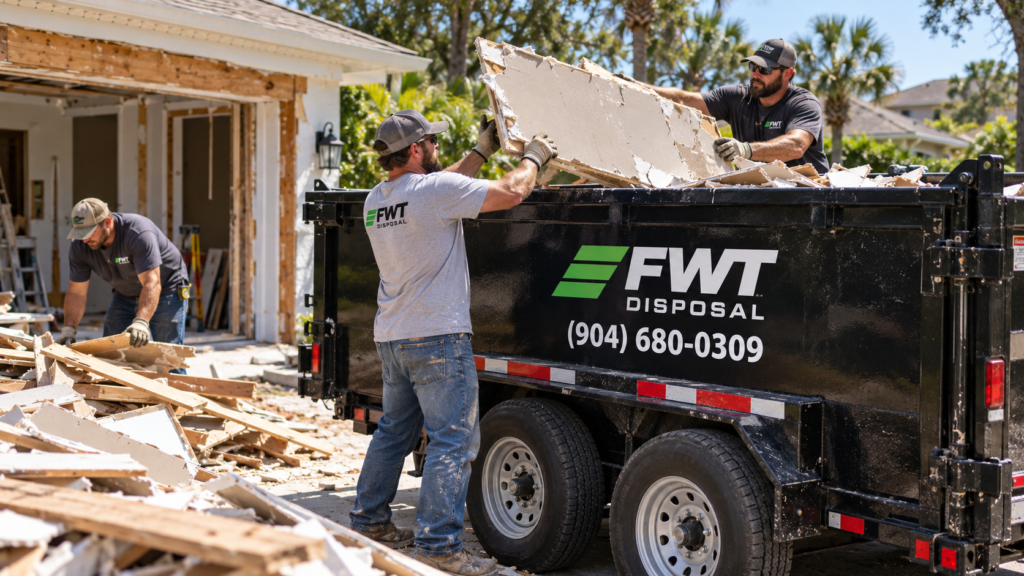
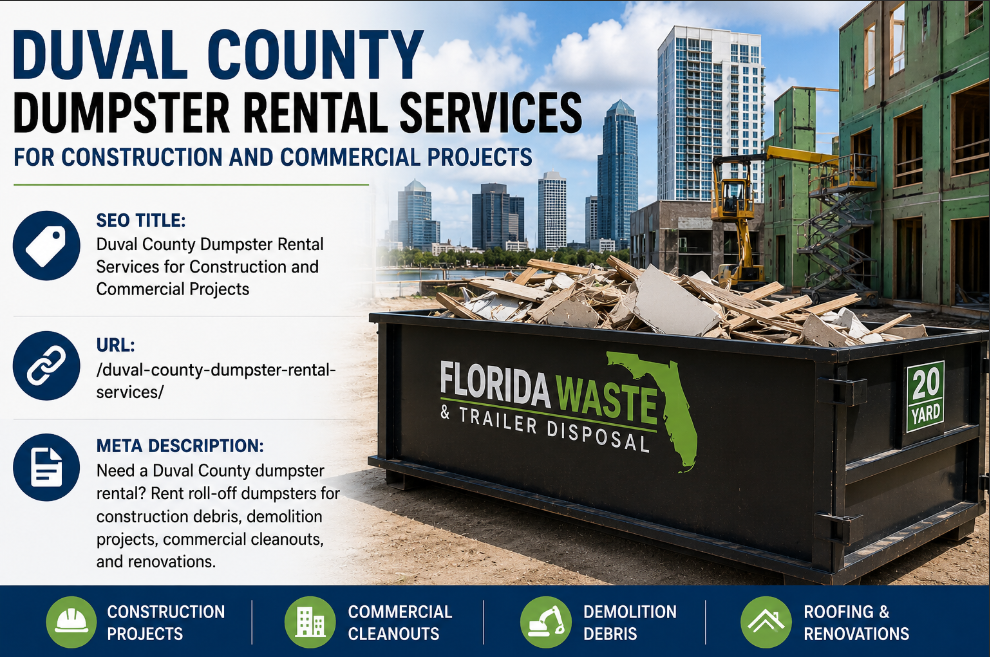
Construction and renovation projects create debris fast. A few sheets of drywall, old cabinets, flooring, lumber, tile, roofing materials, and demolition waste can turn a clean jobsite into a cluttered space in a matter of hours.
Whether you’re remodeling a bathroom, renovating an entire home, replacing a roof, managing a construction site, or handling demolition work, having a reliable way to contain and remove debris can make the project significantly easier.
A construction dumpster rental provides a simple solution: the dumpster is delivered directly to the property or jobsite, debris is loaded as the project progresses, and the container is removed when the work is complete.
For homeowners, contractors, builders, property managers, and businesses throughout Northeast Florida, choosing the right construction dumpster can help keep a project organized while reducing repeated trips to disposal facilities.
This guide explains how construction dumpster rental works, what materials can typically go inside, which dumpster size may be appropriate, and what to consider before scheduling delivery.
What Is a Construction Dumpster Rental?
A construction dumpster is typically a roll-off container designed to collect larger amounts of debris generated during construction, renovation, remodeling, roofing, and demolition projects.
Unlike regular household trash service, a roll-off dumpster is temporarily placed at the project location.
The basic process is straightforward:
- Choose an appropriate dumpster size.
- Schedule delivery to your property or jobsite.
- Load construction debris during the project.
- Schedule pickup when the dumpster is ready.
- The debris is transported for appropriate processing or disposal.
This makes a construction dumpster rental particularly useful for projects that generate debris over several days rather than all at once.
Instead of creating piles around the property or repeatedly loading a pickup truck, contractors and homeowners have one designated location for project waste.
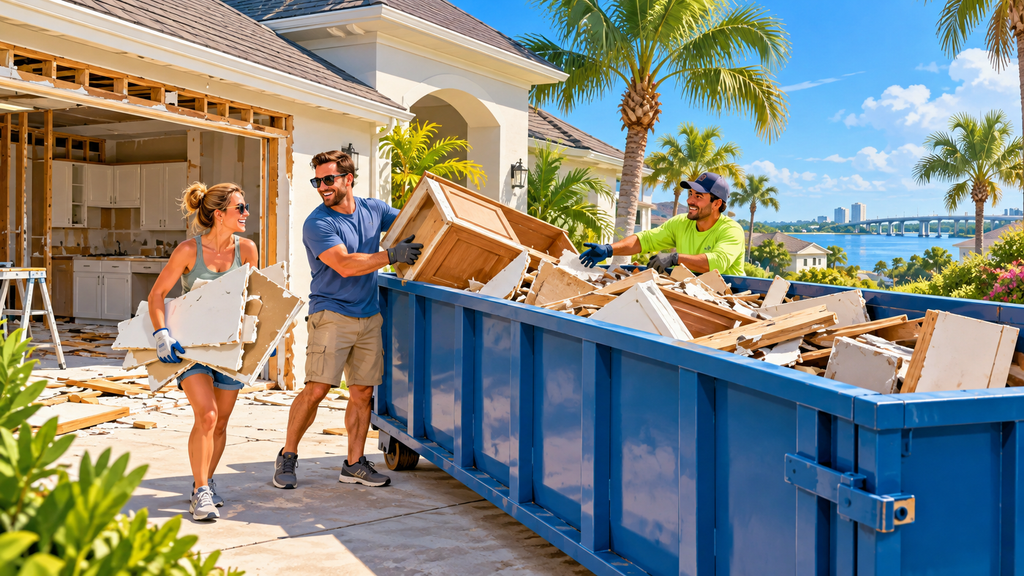
Who Uses Construction Dumpsters?
Construction dumpsters aren’t only for major contractors or large commercial developments.
They are useful for projects of many sizes.
Homeowners
Homeowners commonly rent construction dumpsters for:
- Kitchen renovations
- Bathroom remodels
- Flooring replacement
- Deck removal
- Fence replacement
- Garage renovations
- Home additions
- Landscaping projects
- Shed demolition
- Storm cleanup
- Whole-house remodeling
Even relatively small renovations can create a surprising amount of construction debris.
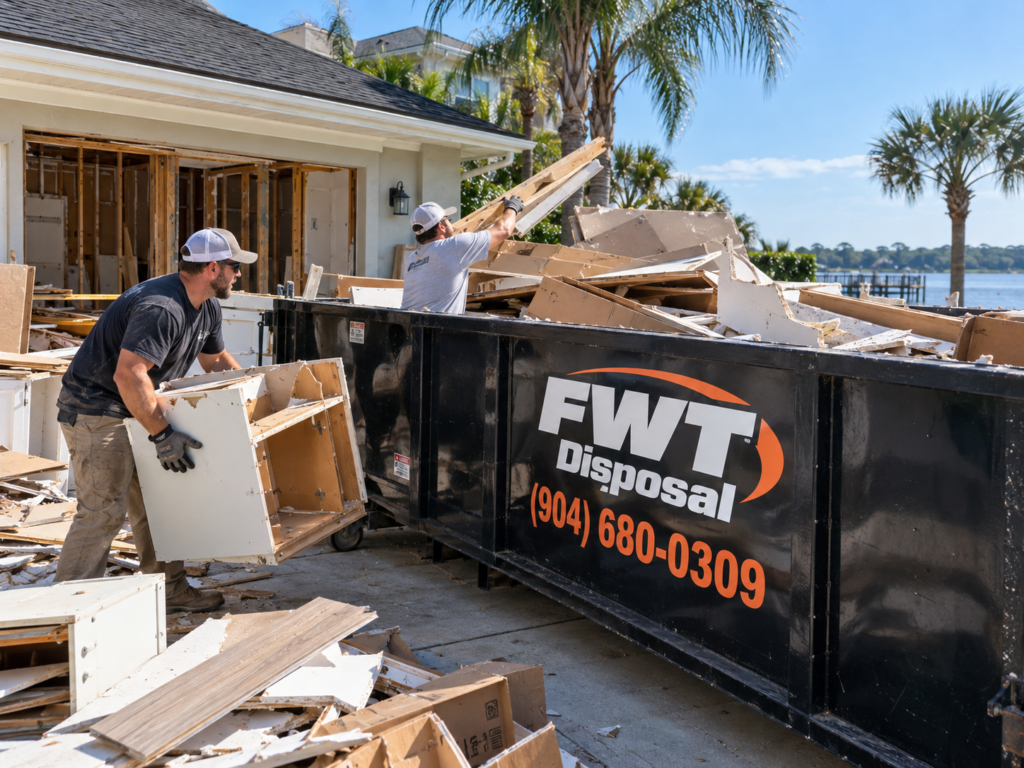
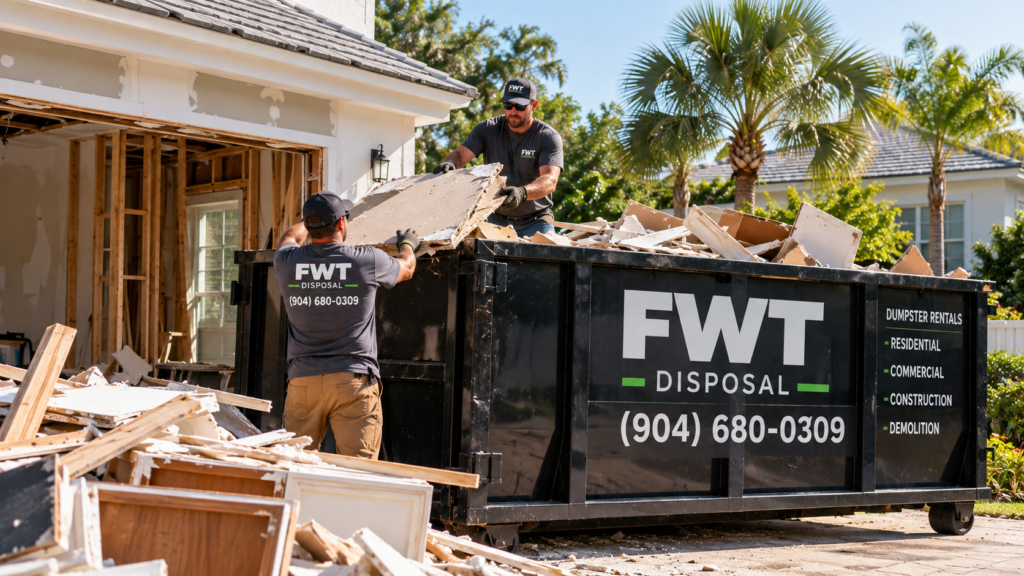
Old drywall, flooring, cabinets, lumber, tile, fixtures, packaging, and other materials quickly consume space.
Contractors and Builders
A contractor dumpster rental provides a centralized location for waste generated throughout a project.
Typical projects include:
- Residential construction
- Commercial renovations
- Roofing
- Interior demolition
- Exterior demolition
- Property rehabilitation
- Tenant improvements
- Remodeling
- Building additions
- Site cleanup
Keeping debris contained can also make a jobsite easier to manage as different trades move through the property.
Property Managers and Investors
Property managers, real estate investors, and house flippers may use a construction waste dumpster during:
- Rental property renovations
- Foreclosure cleanouts
- Property rehabilitation
- Tenant turnover
- Multi-unit remodeling
- Commercial property improvements
When a project includes both unwanted household items and renovation debris, a roll-off dumpster can provide considerably more flexibility than relying on normal trash collection.
Why Use a Roll-Off Dumpster for Construction Debris?
One of the main advantages of using a roll off dumpster for construction is that waste management happens alongside the project.
Debris doesn’t need to be removed after every stage of construction.
Workers can place approved materials directly into the dumpster and continue working.
Keep the Jobsite Organized
Loose lumber, drywall, flooring, packaging, broken fixtures, and demolition materials can quickly accumulate.
Keeping debris in one location helps prevent the entire project area from becoming a disposal zone.
Reduce Disposal Trips
Without a dumpster, construction debris may need to be:
- Loaded into a pickup truck or trailer
- Secured for transportation
- Driven to an appropriate disposal facility
- Unloaded
- Followed by another trip as debris accumulates
For larger projects, this process may need to be repeated many times.
A construction dumpster allows the waste to remain onsite until pickup.
Handle Larger Projects
Normal residential garbage service isn’t designed to handle significant amounts of construction and demolition waste.
A dedicated construction debris dumpster provides considerably more capacity.
Improve Project Workflow
A clear disposal plan makes it easier for contractors and homeowners to determine where debris should go as materials are removed.
This is particularly helpful during demolition, when waste can accumulate quickly.
What Is Considered Construction and Demolition Debris?
Construction and demolition debris—often called C&D debris—includes many materials generated during building, renovation, demolition, and land-development projects.
The Florida Department of Environmental Protection identifies materials such as concrete, brick, steel, glass, asphalt, pipe, gypsum wallboard, lumber, certain construction scraps, and some land-clearing materials within Florida’s definition of construction and demolition debris.
According to Florida DEP, construction and demolition debris represents a significant portion of Florida’s overall municipal solid waste stream.
That makes responsible construction debris removal an important part of managing building and renovation projects throughout the state.
Common Construction Dumpster Materials
Depending on the specific project and disposal requirements, construction dumpsters may be used for materials such as:
- Wood
- Lumber
- Drywall
- Sheetrock
- Flooring
- Tile
- Cabinets
- Doors
- Windows
- Siding
- Roofing materials
- Metal
- Brick
- Concrete
- Fixtures
- Packaging
- Remodeling debris
- Demolition debris
However, the fact that a material comes from a construction site does not automatically mean it can be mixed with every other type of waste.
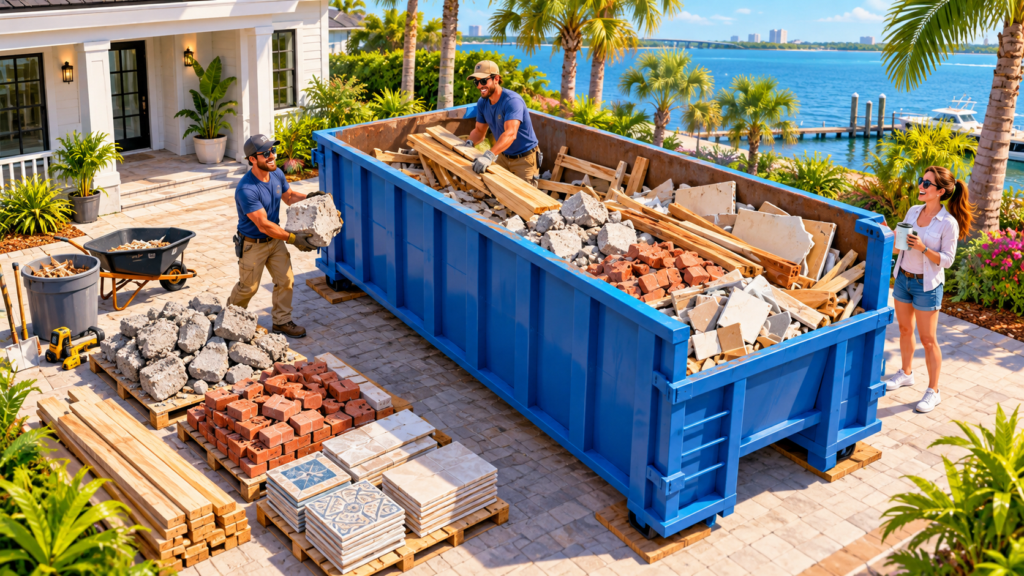
Heavy materials such as concrete, brick, masonry, asphalt, and dirt require special consideration because weight limits can be reached long before the dumpster appears full.
Certain hazardous or regulated materials also require separate disposal.
Always confirm questionable materials before placing them into a dumpster.
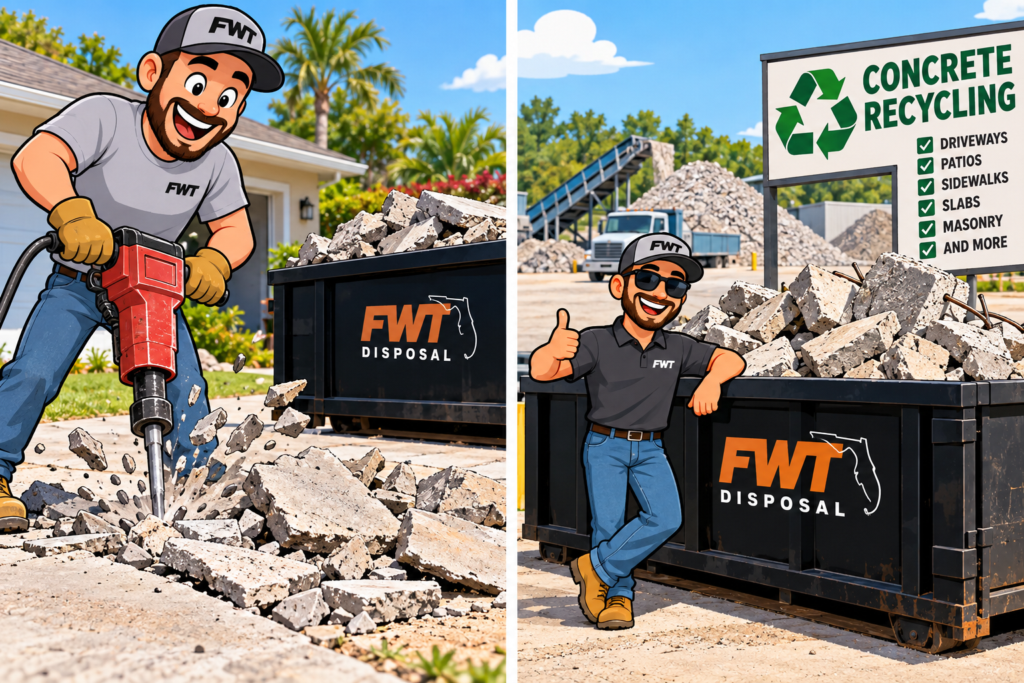
Can You Put Concrete in a Construction Dumpster?
Concrete disposal deserves special attention because concrete is extremely heavy.
A dumpster that is only partially filled with concrete can weigh considerably more than a dumpster filled with lighter renovation materials such as cabinets, lumber, or drywall.
Concrete projects may include:
- Driveway removal
- Patio demolition
- Sidewalk replacement
- Concrete slab removal
- Masonry work
- Foundation work
- Landscaping projects
When arranging a construction dumpster rental for concrete, tell the dumpster provider what material you plan to dispose of before delivery.
This allows the provider to recommend an appropriate container and explain any weight or loading restrictions.
We’ll cover concrete disposal in much greater detail in our guide to Concrete Disposal Near Me in Northeast Florida.
Choosing the Right Construction Dumpster Size
Choosing the right size is one of the most important decisions when renting a dumpster.
A container that is too small may require another dumpster or additional pickup.
A container that is unnecessarily large may provide capacity you never use.
Florida Waste & Trailer Disposal offers multiple roll-off dumpster sizes for projects throughout Northeast Florida.
10-Yard Dumpster
A 10-yard dumpster can work well for smaller construction and renovation projects.
Common examples include:
- Small bathroom remodel
- Flooring removal
- Small deck removal
- Minor renovation
- Small demolition project
- Concrete or heavy-material projects when appropriate
Because heavy debris reaches weight limits quickly, smaller containers are often worth considering when disposing of dense materials.
15-Yard Dumpster
A 15-yard dumpster provides additional capacity while remaining practical for many residential projects.
It may work well for:
- Medium remodeling projects
- Flooring replacement
- Kitchen updates
- Garage renovation
- Deck projects
- Residential construction debris
20-Yard Dumpster
A 20-yard dumpster is a popular option for larger residential projects.
Potential uses include:
- Kitchen remodeling
- Multiple-room renovation
- Larger home cleanouts
- Flooring projects
- Construction debris
- Medium demolition work
It offers significantly more capacity without automatically jumping to the largest construction dumpsters.
30-Yard Dumpster
For larger construction projects, a 30-yard dumpster can provide the additional space needed to manage substantial debris.
Typical projects can include:
- Major home remodeling
- Construction projects
- Larger demolition work
- Commercial renovations
- Property rehabilitation
- Large roofing projects
For many contractors, this size provides a useful balance between capacity and jobsite footprint.
40-Yard Dumpster
A 40-yard dumpster offers the greatest capacity within FWT’s standard roll-off lineup.
It may be appropriate for:
- Major construction
- Large commercial projects
- Large demolition projects
- Extensive property renovations
- High-volume lightweight construction debris
However, bigger does not always mean better.
Heavy materials can reach legal hauling weight limits before a large dumpster is physically full, so material type should always be considered alongside volume.
We’ll explore this topic further in our upcoming guide: What Size Dumpster Do I Need for Construction Debris?
Construction Dumpster Rental for Home Renovations
Home renovation is one of the most common situations where a dumpster becomes useful.
Consider a kitchen remodel.
A contractor may remove:
- Cabinets
- Countertops
- Drywall
- Flooring
- Fixtures
- Trim
- Packaging
- Old appliances or other materials subject to disposal rules
Even before new materials arrive, a significant debris pile can develop.
Bathroom remodeling presents the same issue on a smaller scale. Tile, drywall, vanity units, flooring, shower surrounds, lumber, fixtures, and packaging can quickly accumulate.
A dumpster rental for remodeling allows debris to leave the work area immediately instead of being stored throughout the property.
We’ll cover renovation projects separately in our guide to Dumpster Rental for Home Renovation and Remodeling Projects.
Construction Dumpster Rental for Contractors
Contractors often have different priorities than residential customers.
For a homeowner, the dumpster may simply need to arrive before a weekend renovation begins.
For a contractor managing multiple trades and project deadlines, dumpster scheduling can directly affect workflow.
A reliable jobsite dumpster rental should account for:
- Project schedule
- Expected debris volume
- Type of debris
- Available placement area
- Container size
- Pickup timing
- Potential need for replacement containers
Large projects may require multiple dumpsters or scheduled pickups as construction progresses.
Roofing, demolition, remodeling, and commercial construction can generate high volumes of debris in relatively short periods.
Planning dumpster service before work begins helps avoid unnecessary debris accumulation.
Construction Dumpster Rental for Demolition Projects
Demolition can produce large volumes of material very quickly.
Common demolition debris includes:
- Lumber
- Drywall
- Siding
- Roofing
- Doors
- Windows
- Flooring
- Metal
- Brick
- Concrete
- Fixtures
The appropriate demolition dumpster rental depends heavily on what is being demolished.
Removing interior drywall and cabinets creates a very different waste stream from breaking up a concrete driveway.
That is why dumpster size should never be chosen based only on the physical size of the project.
Material density matters.
Construction Dumpster Rental for Roofing Projects
Roof replacement can generate thousands of pounds of debris.
Roofing waste may include:
- Asphalt shingles
- Underlayment
- Nails
- Flashing
- Wood
- Packaging
- Damaged decking
Because shingles are dense, roofing projects require careful attention to dumpster capacity and weight.
Before renting a dumpster for roofing debris, estimate the size of the roof and discuss the project with the rental company.
How Much Does a Construction Dumpster Rental Cost?
Construction dumpster prices can vary depending on several factors.
These can include:
- Dumpster size
- Rental period
- Debris type
- Debris weight
- Delivery location
- Disposal requirements
- Additional pickups
- Local disposal fees
FWT offers multiple dumpster sizes, with published starting prices ranging from smaller 10-yard containers through larger 40-yard dumpsters.
The cheapest dumpster is not always the lowest-cost option for the overall project.
Choosing a dumpster that is too small may result in an additional rental, while selecting a larger container than necessary can mean paying for unused capacity.
The best approach is to estimate both the volume and type of debris before choosing.
We’ll break this down in detail in our guide to How Much Does a Construction Dumpster Rental Cost in Northeast Florida?
How Long Do You Need a Construction Dumpster?
Rental duration depends on the scope and pace of the project.
A small bathroom renovation may generate most debris in a few days.
A larger remodel may continue for weeks.
Contractors should consider when demolition begins, when new materials arrive, and when the highest volume of debris is likely to be generated.
Scheduling the dumpster too early may consume rental time before it is needed.
Scheduling it too late may leave crews without a practical place to put demolition waste.
Where Should a Construction Dumpster Be Placed?
Placement should be planned before delivery.
Common locations include:
- Driveways
- Construction sites
- Commercial properties
- Designated staging areas
- Other stable, accessible surfaces
The delivery truck needs enough room to safely place and later retrieve the container.
Consider:
- Overhead wires
- Trees
- Gates
- Vehicles
- Buildings
- Surface conditions
- Available turning space
- Access for pickup
If placement may involve a public roadway or other regulated area, verify applicable local requirements before scheduling delivery.
Avoid Overloading the Dumpster
Every roll-off dumpster has physical and hauling limitations.
Do not assume that debris can be stacked indefinitely above the container walls.
An overloaded dumpster can create transportation and safety problems.
Heavy debris creates another issue: the dumpster may appear partially empty while already approaching its hauling weight limit.
This is especially important with:
- Concrete
- Brick
- Block
- Dirt
- Asphalt
- Roofing shingles
- Masonry
If your project involves substantial amounts of these materials, mention them before ordering.
What Should Not Go in a Construction Dumpster?
Some materials require special disposal and should not simply be mixed into construction debris.
Examples may include certain:
- Hazardous chemicals
- Fuels
- Oils
- Batteries
- Paints or solvents
- Pressurized containers
- Regulated materials
Requirements can vary based on the material and disposal facility.
When in doubt, ask before loading.
We’ll provide a more complete material-by-material breakdown in What Can You Put in a Construction Dumpster?
Construction Debris Recycling in Florida
Not all construction debris automatically needs to become landfill waste.
Florida DEP notes that materials such as concrete, brick, metals, lumber, cardboard, and other C&D materials may have recycling or reuse opportunities depending on how the debris is processed and separated.
Concrete and brick, for example, can be crushed for uses such as road construction or fill. Metals can be recovered, while certain wood products may also be reused or processed.
Keeping inappropriate or hazardous materials out of the construction waste stream can help preserve these recycling opportunities.
Construction Dumpster Rental in Northeast Florida
FWT provides roll-off dumpster rental for residential and commercial projects across its Northeast Florida service area, including:
- Duval County
- St. Johns County
- Clay County
- Flagler County
- Putnam County
Projects can range from home renovations and roofing work to contractor jobsites, demolition projects, commercial remodeling, and large property cleanups.
Local service can be especially valuable for construction work because delivery and pickup timing often need to coordinate with the project schedule.
How to Rent a Construction Dumpster
The process does not need to be complicated.
Step 1: Identify Your Project
Explain what type of work you’re doing.
For example:
“Kitchen renovation.”
“Concrete patio removal.”
“Roof replacement.”
“Full interior demolition.”
This provides much more useful information than simply saying you need a dumpster.
Step 2: Estimate the Debris
Consider both volume and weight.
Ten cubic yards of broken concrete is very different from ten cubic yards of cardboard and lumber.
Step 3: Choose the Dumpster Size
Select the container based on:
- Project size
- Debris type
- Expected volume
- Weight
- Available placement area
If you’re unsure, ask for help choosing the size.
Step 4: Schedule Delivery
Choose a delivery date that matches the beginning of demolition or debris-producing work.
Step 5: Load Approved Materials
Keep debris within the container’s loading requirements and avoid adding prohibited items.
Step 6: Schedule Pickup
Once the project is complete—or the dumpster is full—schedule removal.
Find the Right Construction Dumpster for Your Project
Construction waste management is easier when it is planned before demolition begins.
Whether you’re renovating one room or managing an active construction site, the right construction dumpster rental can provide a central place for debris while helping keep the property organized.
Florida Waste & Trailer Disposal offers roll-off dumpsters in multiple sizes for construction, remodeling, roofing, demolition, residential, and commercial projects throughout Northeast Florida.
Available sizes include:
- 10-yard dumpsters
- 15-yard dumpsters
- 20-yard dumpsters
- 30-yard dumpsters
- 40-yard dumpsters
Not sure which one fits your project?
Contact FWT before ordering and describe the project, expected materials, and approximate amount of debris. The team can help determine which container makes the most sense.
When Is a Construction Dumpster Rental the Best Choice?
A construction dumpster rental is often the most practical option when a project produces more debris than regular household trash service can reasonably handle. This is especially true during remodeling, demolition, roofing, flooring replacement, property rehabilitation, and larger home improvement projects.
One of the biggest advantages of a construction dumpster rental is having a dedicated place for debris throughout the project. Instead of allowing broken drywall, lumber, old cabinets, flooring, tile, and packaging to accumulate around the property, approved materials can be placed directly into the dumpster as work progresses.
For homeowners, a construction dumpster rental can simplify projects that might otherwise require several trips to a disposal facility. Even a relatively small renovation can generate more debris than expected, particularly when removing cabinets, flooring, drywall, doors, fixtures, or old building materials.
Contractors can also benefit from planning a construction dumpster rental before work begins. When crews know where debris should be placed, it becomes easier to keep the jobsite organized and maintain clear work areas. On larger projects, dumpster delivery and pickup can also be coordinated with demolition phases, remodeling schedules, and other construction activity.
Construction Dumpster Rental for Small Projects
Not every construction dumpster rental needs to involve a major building project.
Smaller roll-off dumpsters can be useful for projects such as:
- Bathroom renovations
- Small kitchen remodels
- Flooring removal
- Deck replacement
- Shed demolition
- Fence removal
- Garage improvements
- Minor interior demolition
The key is choosing a container based on both the amount and type of material being removed.
Construction Dumpster Rental for Large Projects
A larger construction dumpster rental may be more appropriate for whole-home renovations, major remodeling projects, commercial construction, property rehabilitation, or demolition work.
Larger containers provide additional volume for materials such as lumber, drywall, siding, fixtures, cabinetry, packaging, and general construction debris.
However, material weight remains important. A large dumpster filled with lightweight renovation debris is very different from one containing concrete, brick, asphalt, or masonry.
Planning Your Construction Dumpster Rental
Before scheduling a construction dumpster rental, consider three questions:
- What type of project are you completing?
- What materials will be removed?
- Approximately how much debris will the project generate?
Providing this information can help determine the most appropriate dumpster size and reduce the risk of ordering a container that is too small or unnecessarily large.
For projects throughout Northeast Florida, planning the construction dumpster rental before demolition starts can help avoid delays and keep the cleanup process moving alongside the work.
Whether you are a homeowner completing a renovation or a contractor managing an active jobsite, the right construction dumpster rental provides a practical way to contain debris from the beginning of the project through final cleanup.