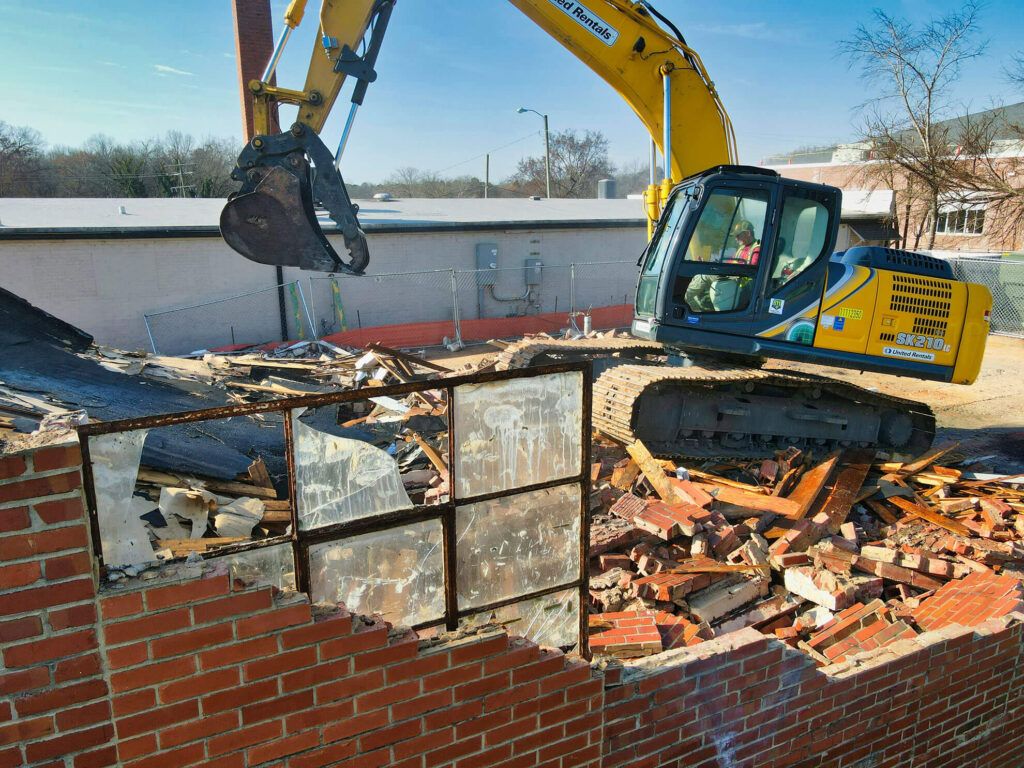
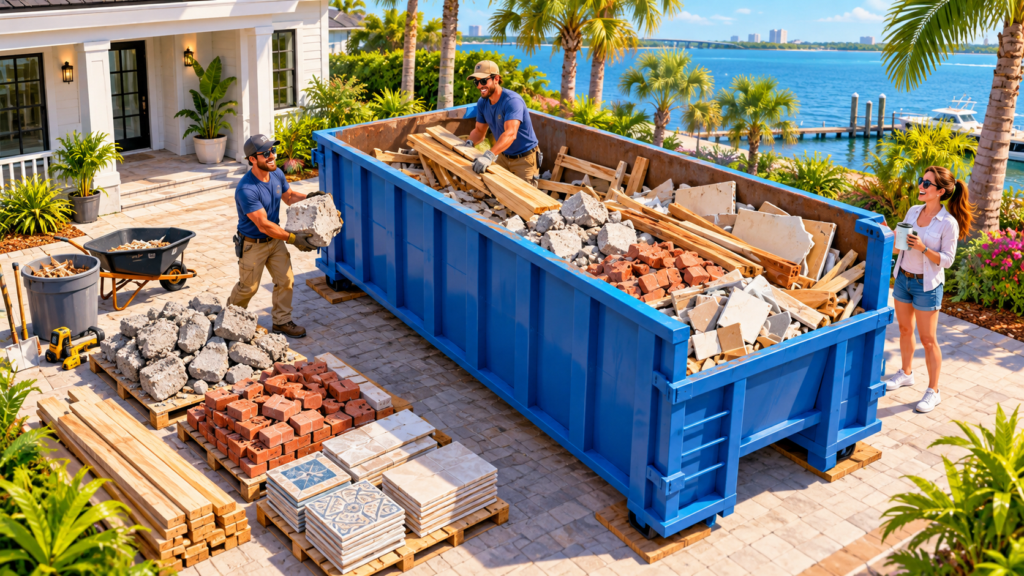
Breaking up a patio, driveway, walkway, slab, retaining wall, or old masonry structure creates one major problem very quickly: what do you do with all that concrete?
Concrete is heavy, difficult to transport, and usually not something you can place in normal household trash. That is why homeowners, contractors, landscapers, and property managers often begin searching for concrete disposal near me as soon as a demolition or renovation project gets underway.
In Northeast Florida, there are several ways to handle concrete waste depending on how much material you have, whether the concrete is mixed with other debris, and whether you have a practical way to transport it.
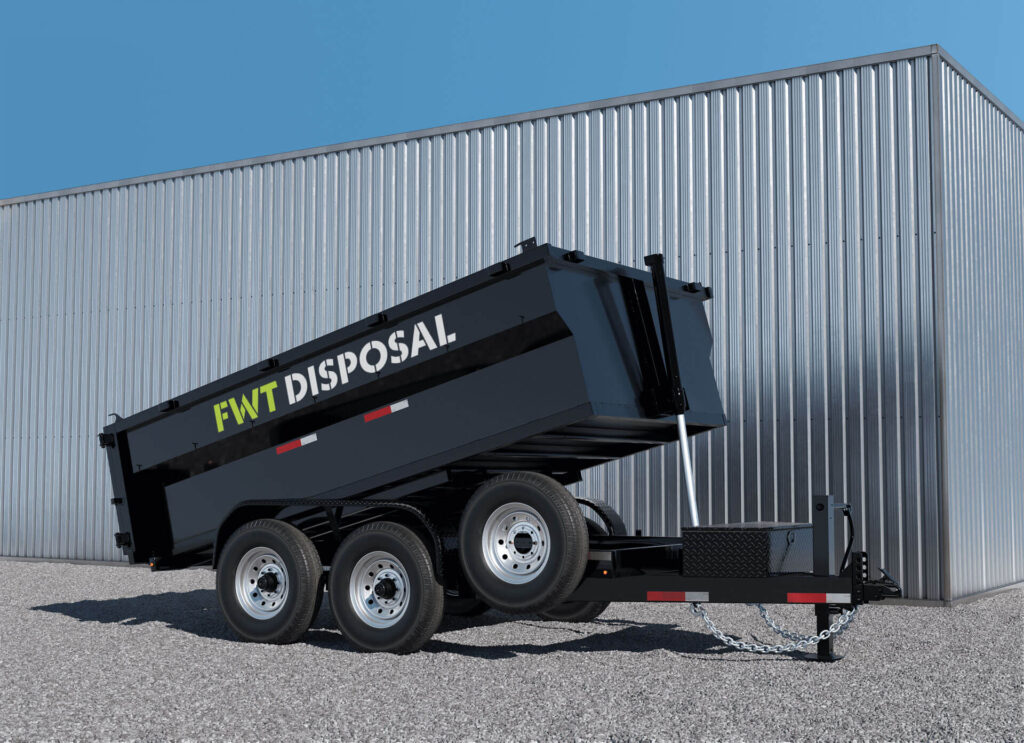
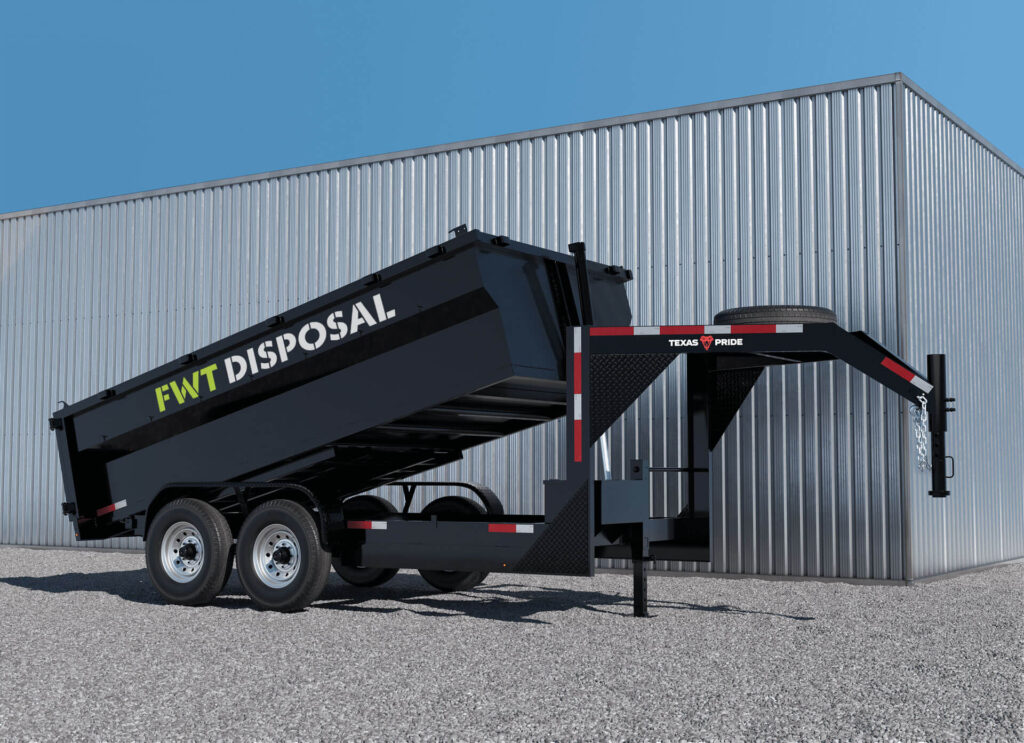
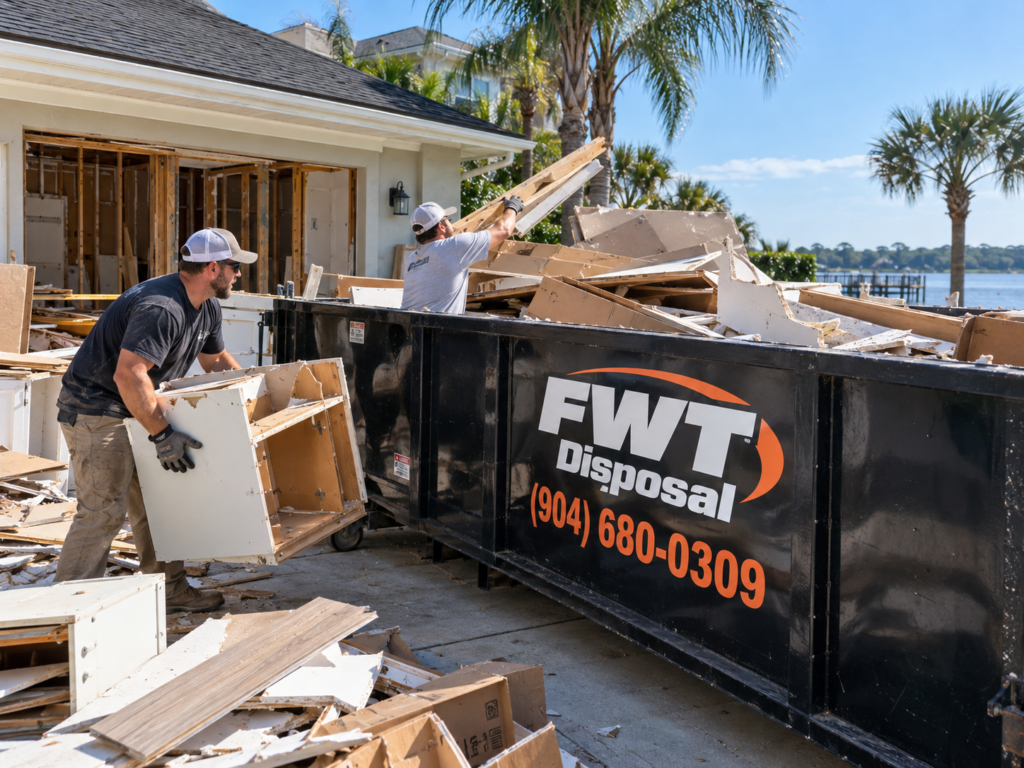
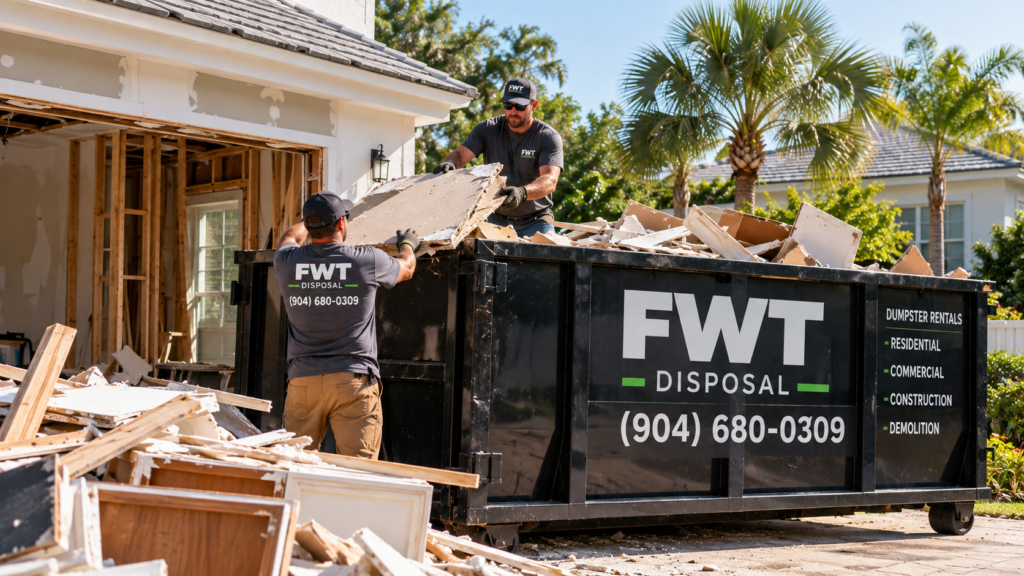
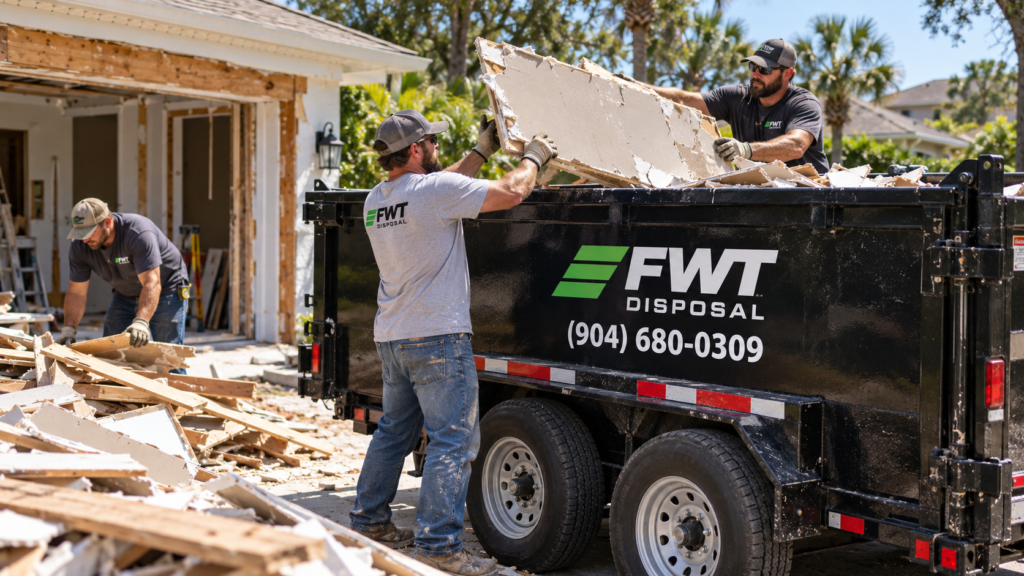
For many projects, a roll-off dumpster can provide one of the simplest solutions because the container is delivered directly to the property, loaded onsite, and removed once the concrete disposal project is complete.
This guide explains how concrete disposal near me works, when a dumpster makes sense, what size may be appropriate, and what homeowners and contractors should know before loading heavy materials.
Why Concrete Disposal Requires Special Planning
Concrete is very different from normal household junk.
A dumpster filled with cardboard, furniture, or light construction debris may have significant empty capacity before reaching its weight limit.
Concrete is the opposite.
Even a relatively small amount of broken concrete can weigh thousands of pounds.
That means the main consideration with concrete disposal near me is often not how much space the debris takes up.
It is how much the material weighs.
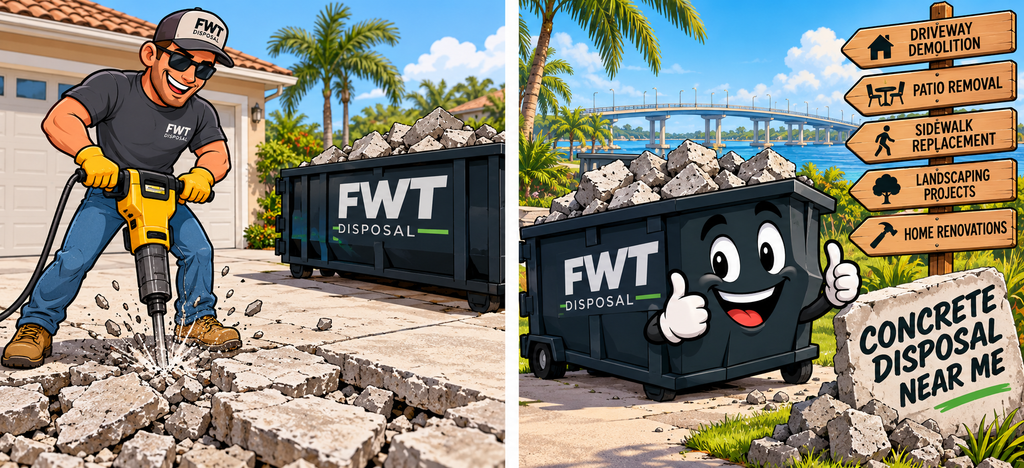
Concrete disposal projects can include:
- Driveway demolition
- Patio removal
- Sidewalk replacement
- Walkway removal
- Concrete slab demolition
- Pool deck renovation
- Foundation work
- Retaining wall removal
- Landscape renovation
- Commercial construction
- Masonry demolition
Before selecting a disposal method, estimate how much concrete the project will generate.
Where Can I Find Concrete Disposal Near Me?
When people search for concrete disposal near me, they are usually looking for one of three solutions.
1. Rent a Dumpster
A concrete dumpster rental allows the container to be placed directly at your home, jobsite, or commercial property.
You load the concrete as the project progresses, then schedule pickup when the work is finished.
This is particularly convenient for projects where demolition takes place over several days.
2. Haul Concrete to a Disposal or Recycling Facility
If you have a pickup truck or trailer capable of safely transporting heavy material, you may be able to haul concrete directly to an approved facility.
However, concrete becomes heavy very quickly.
Multiple trips may be necessary even for projects that do not appear especially large.
3. Use a Debris Removal Service
For smaller projects or situations where you do not want to load the material yourself, a debris removal service may be another option.
The best solution depends on the amount of concrete, access to the project area, and whether the concrete is mixed with other materials.
Why a Dumpster Can Make Concrete Disposal Easier
For many homeowners and contractors searching for concrete disposal near me, the biggest advantage of a roll-off dumpster is convenience.
Instead of repeatedly transporting broken concrete, the container remains at the project location.
As concrete is removed, it can be placed directly into the dumpster.
This can be especially helpful for:
- Driveway demolition
- Patio projects
- Sidewalk removal
- Remodeling
- Landscaping
- Small construction jobs
- Commercial improvements
A dedicated container also gives workers a clear location for debris instead of creating piles around the property.
Can Concrete Go in a Dumpster?
Yes, concrete can be handled with certain dumpster rentals, but the rental company should know about it before delivery.
Concrete is considered a heavy material.
That means the container size, amount of concrete, and allowable weight all matter.
FWT currently identifies its 10-yard dumpster as an option for smaller concrete, construction, patio, and renovation projects, while specifically advising customers to confirm weight limits before loading.
This is why simply ordering the largest dumpster available is not necessarily the best strategy.
For heavy material, a smaller container may actually be more appropriate.
Why Smaller Dumpsters Often Work Better for Concrete
It may seem logical that a large concrete project requires a large dumpster.
But concrete disposal does not work exactly like household cleanup.
Large dumpsters are designed to provide more volume.
Concrete usually reaches the dumpster’s practical weight limit long before the container’s entire volume is needed.
For that reason, a 10-yard dumpster is commonly worth considering for smaller heavy-debris projects.
FWT’s 10-yard dumpster is described as suitable for projects such as patio demolition, minor construction work, and concrete disposal, while the company recommends discussing heavy material and weight restrictions before loading.
Common Concrete Disposal Projects
The amount of concrete produced varies significantly depending on the project.
Concrete Patio Removal
Older patios may crack, shift, or become uneven over time.
When the patio is demolished, the resulting pieces are dense and difficult to move.
A nearby dumpster allows debris to be loaded during demolition rather than stacked for later removal.
Driveway Concrete Disposal
Driveway replacement can generate a substantial amount of concrete.
Because driveways typically cover larger areas and can contain thick slabs, the total debris weight may be significant.
Discuss the project dimensions with the dumpster provider before ordering.
Sidewalk and Walkway Removal
Small sidewalks and garden walkways may produce less material than driveways but can still generate more weight than expected.
This is a common residential concrete disposal near me use case.
Concrete Slab Removal
Sheds, patios, outdoor structures, and older additions may sit on concrete slabs.
Removing the structure may be simple compared with disposing of the slab beneath it.
Landscaping Projects
Landscape redesigns can involve:
- Concrete borders
- Old pathways
- Decorative blocks
- Pavers
- Retaining wall material
- Patio sections
These projects often generate mixed heavy debris.
Can Brick and Concrete Go in the Same Dumpster?
Potentially, but you should confirm this before loading.
Brick, concrete, block, stone, and similar materials are all dense.
Even if the materials are acceptable individually, combining large quantities can cause the dumpster to reach its weight allowance quickly.
The cleaner and more separated the material is, the more disposal or recycling options may also be available.
The Florida Department of Environmental Protection notes that crushed concrete and brick can be reused in applications such as road construction and drainage, while concrete, block, masonry, and other clean debris may have additional beneficial uses.
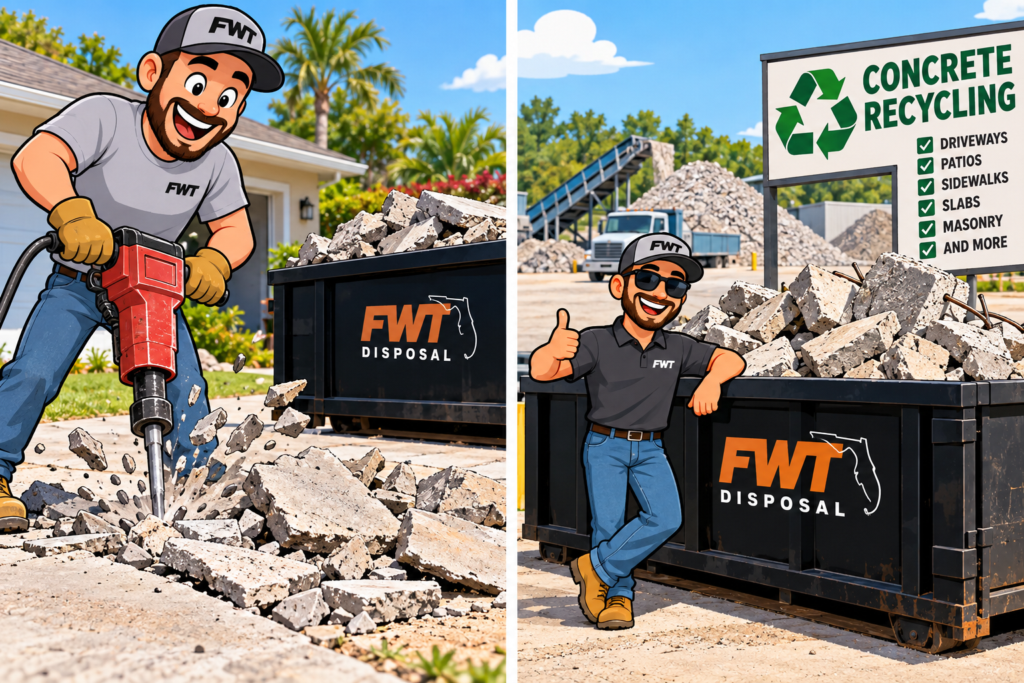
Can Concrete Be Recycled?
Yes.
Concrete does not always need to be treated as ordinary landfill waste.
The Florida Department of Environmental Protection identifies concrete and brick among construction and demolition materials that can be recovered and reused. Crushed concrete and brick may be used for road construction and drainage, while clean concrete and masonry may have other reuse applications.
This is one reason it can be helpful to avoid contaminating concrete with inappropriate materials.
Clean material may have more recycling and reuse possibilities than a mixed debris load.
What Should Not Be Mixed With Concrete?
Before using a dumpster for concrete disposal near me, ask whether the load needs to remain concrete-only or whether other approved debris can be included.
Depending on disposal requirements, avoid automatically mixing concrete with:
- Household trash
- Hazardous chemicals
- Paint
- Oils
- Fuels
- Batteries
- Pressurized containers
- Regulated materials
- Large amounts of soil
- Other questionable waste
Florida’s definition of construction and demolition debris is focused on generally non-water-soluble, nonhazardous building materials such as concrete, brick, asphalt, steel, wallboard, and lumber. Mixing C&D debris with other types of solid waste can change how the material is classified.
When in doubt, confirm before loading.
Concrete Disposal for Homeowners
Homeowners frequently need concrete disposal near me during improvement projects.
Common examples include:
- Replacing a cracked driveway
- Removing an old patio
- Building a new deck
- Replacing walkways
- Installing landscaping
- Removing a shed slab
- Renovating an outdoor living area
One of the main challenges for homeowners is transportation.
A pile of broken concrete may look manageable until it is time to load it into a vehicle.
Because concrete is so dense, hauling it personally can require multiple carefully loaded trips.
A roll-off dumpster eliminates much of that transportation work.
Concrete Disposal for Contractors
Contractors often deal with larger quantities of concrete and stricter project schedules.
A contractor may need concrete disposal near me for:
- Demolition projects
- Commercial renovation
- Residential construction
- Hardscape replacement
- Foundation work
- Site preparation
- Property rehabilitation
Having the container at the jobsite allows concrete to be removed as work progresses.
This can help keep the site organized and reduce unnecessary material handling.
For large projects, contractors should discuss expected tonnage and pickup scheduling before demolition begins.
Concrete Disposal During Renovation Projects
Concrete debris is not limited to exterior work.
Interior remodeling can also generate concrete, masonry, tile, mortar, block, and other heavy materials.
Examples include:
- Tile removal
- Masonry fireplace demolition
- Bathroom renovation
- Flooring demolition
- Block wall removal
- Commercial tenant improvements
When concrete is mixed with lighter renovation debris, dumpster planning becomes more important because the weight characteristics of the materials are very different.
How to Estimate Concrete Before Ordering a Dumpster
You do not need a perfect estimate, but a rough calculation helps.
Before contacting a dumpster provider, determine:
- Approximate length
- Approximate width
- Approximate thickness
- Type of concrete or masonry
- Whether reinforcement is present
- Whether other debris will be included
For example, removing a small patio is very different from removing an entire driveway.
Giving the dumpster provider project dimensions helps them recommend a more appropriate solution.
What About Reinforced Concrete?
Some concrete includes reinforcing steel, wire mesh, or rebar.
If your project contains reinforced concrete, mention it when discussing concrete disposal near me.
Rebar may need to remain within certain dimensions or may require different handling depending on the receiving facility and dumpster provider.
Do not assume that a large piece of reinforced slab should be placed directly into a roll-off container without first breaking it into manageable sections.
How to Load Concrete Into a Dumpster
Concrete loading should be planned carefully.
Break Large Pieces Down
Smaller pieces are easier to handle and allow the load to be distributed more evenly.
Load Evenly
Avoid placing all of the heavy material in one corner or one end of the dumpster.
Try to distribute weight across the container.
Do Not Fill Above the Allowed Level
Concrete is heavy enough without overloading the container.
Follow the fill and weight requirements provided by the rental company.
Keep the Load Clean When Required
If the dumpster is intended for clean concrete, do not add unrelated trash or prohibited materials.
Stop Before Weight Becomes a Problem
A concrete dumpster may reach its allowable weight before it looks full.
This is one of the most important things to understand about concrete disposal near me.
Concrete Disposal vs Junk Removal
Both options can work, but they solve different problems.
Dumpster Rental
A dumpster may make more sense when:
- You are doing the demolition yourself
- The project lasts several days
- Concrete is produced gradually
- You want the container onsite
- You have workers available to load debris
Full-Service Debris Removal
Removal service may make more sense when:
- The concrete is already piled
- You do not want to load it yourself
- The project is very small
- You need labor as well as hauling
The right choice depends on how the work is being performed.
Concrete Disposal Near Me in Jacksonville and Duval County
Jacksonville and surrounding Duval County experience constant residential renovation, commercial improvement, construction, and property redevelopment.
Concrete projects can include everything from driveway replacement to commercial demolition.
FWT serves Duval County as part of its Northeast Florida dumpster service area.
For concrete projects, describe the material and amount before scheduling so the appropriate dumpster and weight allowance can be discussed.
Concrete Disposal Near Me in St. Augustine and St. Johns County
St. Johns County continues to see residential development, remodeling, landscaping, and property improvement.
Concrete removal may be necessary for:
- Patios
- Pool decks
- Walkways
- Driveways
- Home additions
- Renovations
FWT provides dumpster service in St. Johns County, including projects in and around St. Augustine.
Concrete Disposal in Clay County
Home improvement and construction projects throughout Clay County can generate concrete, block, brick, and other dense materials.
Whether the work is taking place in Orange Park, Fleming Island, Green Cove Springs, Middleburg, or another community, the same rule applies: discuss heavy material before choosing the dumpster.
Concrete Disposal in Flagler County
Flagler County homeowners and contractors may need concrete disposal during renovation, coastal property improvement, driveway work, landscaping, and storm-related rebuilding.
FWT includes Flagler County within its dumpster delivery area.
Concrete Disposal in Putnam County
Concrete removal is also common on rural properties, older homes, agricultural sites, and renovation projects throughout Putnam County.
Projects may involve old slabs, barns, walkways, foundations, or property improvements.
FWT also serves Putnam County.
How Much Does Concrete Disposal Cost?
Concrete disposal cost can depend on several factors:
- Amount of concrete
- Total weight
- Dumpster size
- Rental duration
- Delivery location
- Disposal facility fees
- Whether concrete is mixed with other debris
Weight is usually one of the most important factors.
FWT’s current 10-yard dumpster page lists the first ton as included, with additional weight billed separately, so customers handling concrete should confirm current pricing and anticipated weight before ordering.
A larger dumpster does not automatically mean a cheaper concrete disposal project.
The best choice is the container that safely matches the expected weight and volume.
How to Find the Best Concrete Disposal Near Me
If you are comparing concrete disposal near me options, ask a few questions before choosing a provider.
Does the Company Accept Concrete?
Never assume.
Tell the company exactly what material you have.
What Dumpster Size Do They Recommend?
The answer should consider weight, not just volume.
What Weight Is Included?
This is especially important with concrete.
What Happens if the Load Is Overweight?
Understand additional weight charges before ordering.
Can Other Materials Be Mixed With Concrete?
Ask before combining debris.
Does the Company Serve Your Location?
Confirm delivery availability for your city or county.
Concrete Disposal Near Me With FWT Disposal
Florida Waste & Trailer Disposal provides roll-off dumpster service throughout:
- Duval County
- St. Johns County
- Clay County
- Flagler County
- Putnam County
For smaller concrete projects, FWT’s 10-yard dumpster is one option specifically positioned for concrete, patio demolition, and construction debris.
Because every concrete project is different, the best approach is to describe the job before ordering.
Tell FWT:
- What you are demolishing
- Approximate dimensions
- Whether the load is concrete-only
- Whether brick, block, soil, or other materials are involved
- Where the dumpster will be placed
That information makes it easier to determine whether a 10-yard dumpster or another disposal solution is appropriate.
Make Concrete Disposal Part of the Project Plan
Concrete removal is much easier when disposal is planned before demolition starts.
Waiting until a driveway, patio, or slab has already been broken apart can leave you with thousands of pounds of debris sitting on the property and no practical way to move it.
If you are searching for concrete disposal near me in Northeast Florida, consider the project size, material weight, loading access, and disposal method before work begins.
For smaller concrete, masonry, patio, and construction projects, a properly selected roll-off dumpster can provide a convenient way to keep debris contained onsite and eliminate repeated hauling trips.
Contact FWT with the details of your project before ordering so the team can help determine the appropriate dumpster size and explain current weight and disposal requirements.