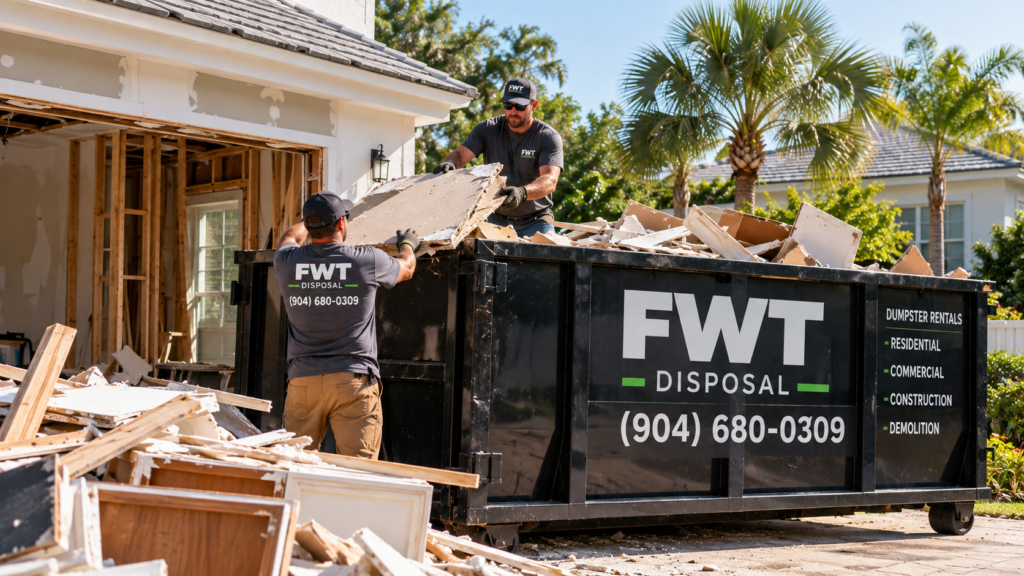
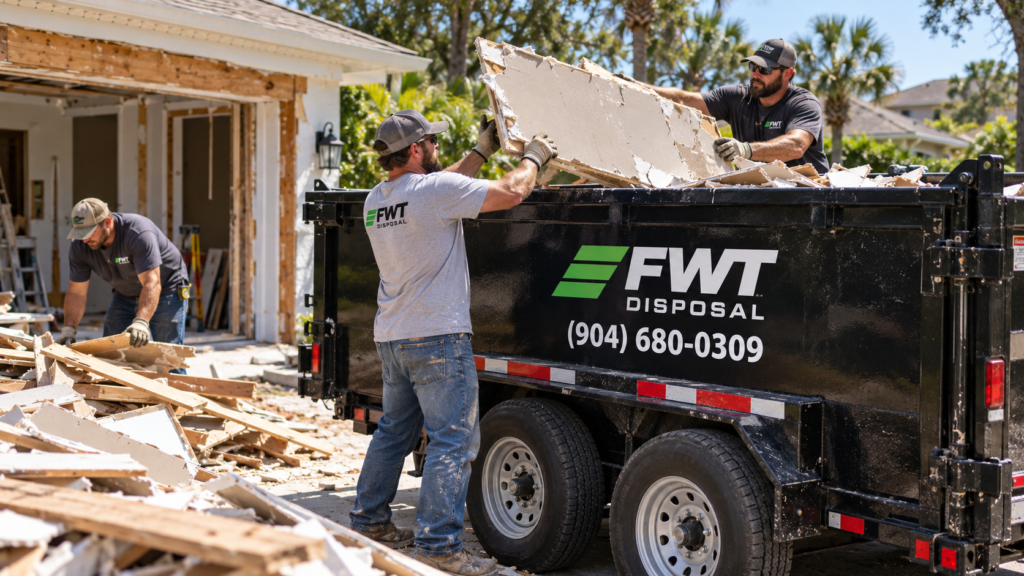
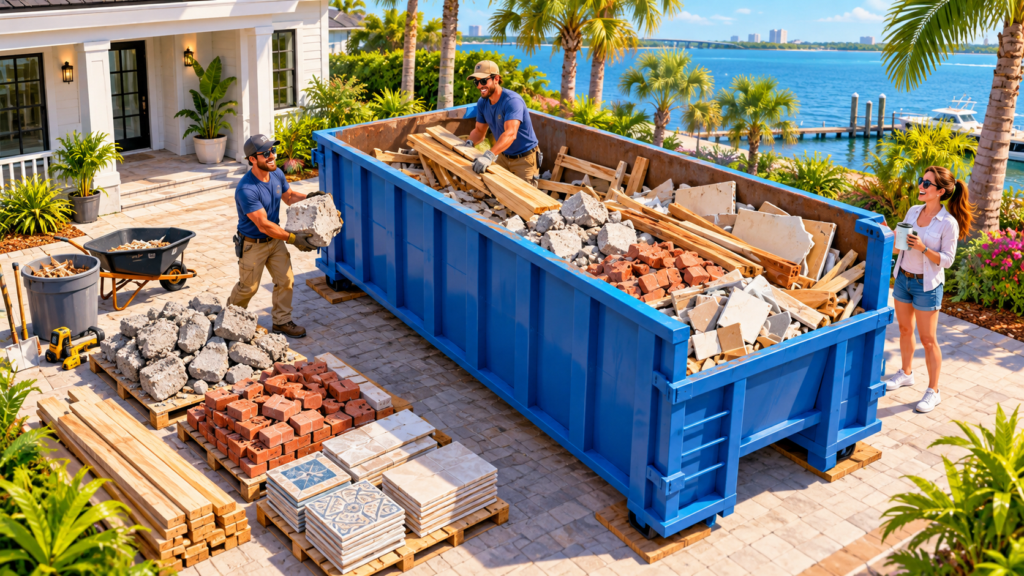
One of the most common questions homeowners and contractors ask before a renovation, demolition, or remodeling project is: what can you put in a construction dumpster?
The answer depends on the type of material, its weight, whether it is regulated, and the rules of the dumpster provider.
In general, many common construction materials can go into a roll-off container, including wood, drywall, flooring, cabinets, siding, roofing debris, tile, and other approved remodeling waste.
But not everything belongs in the same container.
Understanding what can you put in a construction dumpster before demolition starts can help prevent delays, overweight loads, rejected materials, and unnecessary disposal problems.
For projects throughout Northeast Florida, planning the waste stream before work begins is one of the easiest ways to keep the job organized.
What Can You Put in a Construction Dumpster?
Most ordinary renovation and construction materials can typically be handled in a construction dumpster when they are approved by the provider.
Common examples include:
- Lumber
- Wood scraps
- Drywall
- Sheetrock
- Cabinets
- Flooring
- Doors
- Trim
- Siding
- Roofing materials
- Tile
- Fixtures
- Packaging
- Demolition debris
- Remodeling debris
- Certain metals
- Concrete under the right conditions
- Brick and masonry under the right conditions
The important thing to remember is that the answer to what can you put in a construction dumpster is not only about whether the material is allowed.
Weight and volume matter too.
A container filled with drywall behaves very differently from one filled with concrete.
Can You Put Wood and Lumber in a Construction Dumpster?
Yes, wood and lumber are among the most common construction dumpster materials.
Typical examples include:
- Framing lumber
- Plywood
- Deck boards
- Baseboards
- Trim
- Fence panels
- Shelving
- Cabinets
- Doors
- Wood scraps
For homeowners wondering what can you put in a construction dumpster, wood is usually one of the easiest materials to manage.
Because lumber can be long and bulky, breaking it down before loading can help use the container more efficiently.
Protruding nails should also be handled carefully.
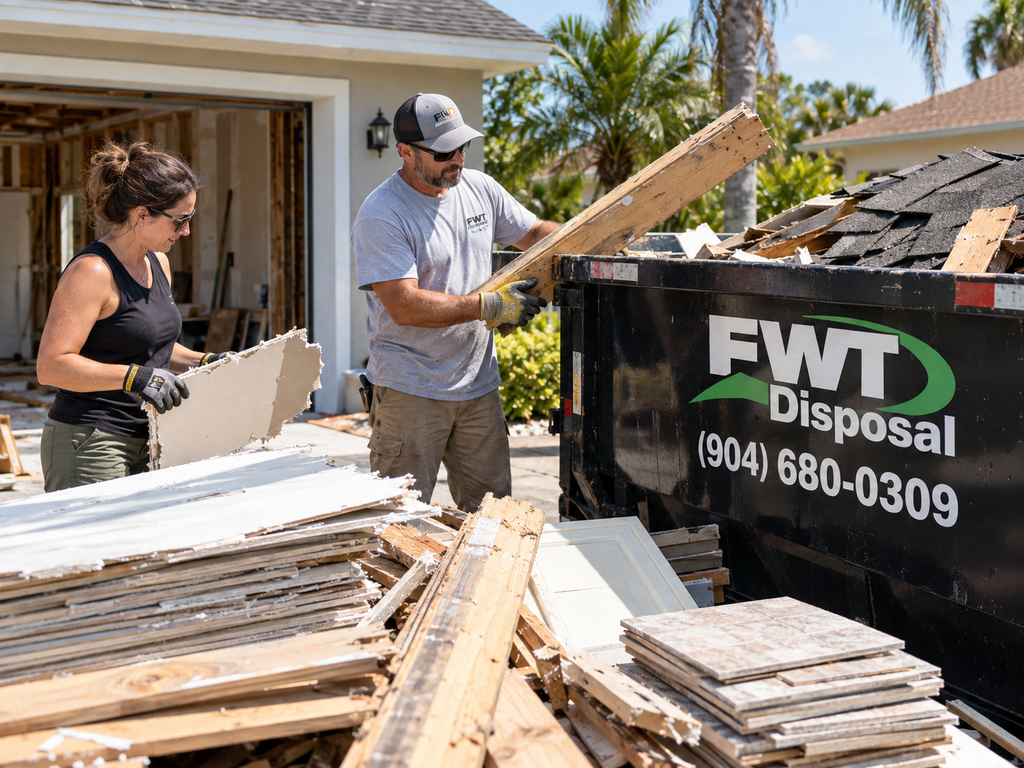
Can You Put Drywall in a Construction Dumpster?
Drywall is another common material found in remodeling and demolition loads.
Projects that often generate drywall include:
- Bathroom renovations
- Kitchen remodels
- Interior demolition
- Home additions
- Commercial renovations
- Water-damage repairs
If you’re asking what can you put in a construction dumpster during an interior remodel, drywall is commonly part of the load.
Large sheets should be broken down into manageable pieces so they can be loaded more efficiently.
Drywall is lighter than concrete or brick, but it can consume a surprising amount of dumpster volume.
Can You Put Cabinets in a Construction Dumpster?
Yes, cabinets are commonly removed during kitchen, bathroom, garage, and commercial remodeling projects.
Cabinet debris may include:
- Cabinet boxes
- Doors
- Shelves
- Drawer units
- Trim
- Hardware
When considering what can you put in a construction dumpster, cabinets are generally straightforward, but they can waste a lot of space if loaded intact.
Breaking them down first can help fit more debris into the same container.
Can You Put Flooring in a Construction Dumpster?
Many types of flooring can be included in construction debris.
Examples include:
- Carpet
- Vinyl
- Laminate
- Hardwood
- Engineered flooring
- Ceramic tile
- Porcelain tile
- Underlayment
The type of flooring matters because weight varies significantly.
Carpet and vinyl are relatively light.
Tile, stone, mortar, and cement board are much heavier.
So when deciding what can you put in a construction dumpster, always think about both material type and total weight.
Can You Put Tile in a Construction Dumpster?
Tile can usually be part of a construction debris load, but it is dense and heavy.
Bathroom and kitchen projects may generate:
- Floor tile
- Shower tile
- Backsplash
- Mortar
- Thinset
- Cement board
- Broken countertop material
This is where homeowners sometimes misunderstand what can you put in a construction dumpster.
A material may be acceptable, but that does not mean you can load unlimited amounts of it.
Weight limits still apply.
Can You Put Roofing Shingles in a Construction Dumpster?
Roofing projects can produce large volumes of shingles and other debris very quickly.
Typical roofing waste includes:
- Asphalt shingles
- Underlayment
- Flashing
- Nails
- Damaged decking
- Packaging
Roofing shingles are much heavier than they appear.
If your project involves roofing, tell FWT before ordering so the right container can be selected.
For contractors asking what can you put in a construction dumpster, roofing debris is common, but the load needs to be planned with weight in mind.
Can You Put Siding in a Construction Dumpster?
Many siding materials can be handled as construction debris.
Examples include:
- Vinyl siding
- Wood siding
- Exterior trim
- Sheathing
- Some other approved exterior building materials
If you are working on an older property, make sure the materials do not contain regulated substances before disposal.
Understanding what can you put in a construction dumpster is especially important when older building materials are involved.
Can You Put Doors and Windows in a Construction Dumpster?
Doors are common remodeling debris.
Windows may require more care because broken glass can create safety issues.
Construction debris may include:
- Interior doors
- Exterior doors
- Door frames
- Window frames
- Broken glass
- Trim
If you are asking what can you put in a construction dumpster during a major remodel, doors are typically straightforward, while windows should be handled carefully and confirmed if large quantities are involved.
Can You Put Metal in a Construction Dumpster?
Some metal construction debris may be accepted.
Examples include:
- Metal framing
- Pipes
- Flashing
- Hardware
- Metal siding
- Small fixtures
- Construction scraps
Larger amounts of metal may be worth separating for recycling.
When deciding what can you put in a construction dumpster, it can sometimes make more sense to keep recyclable metals out of the general debris load.
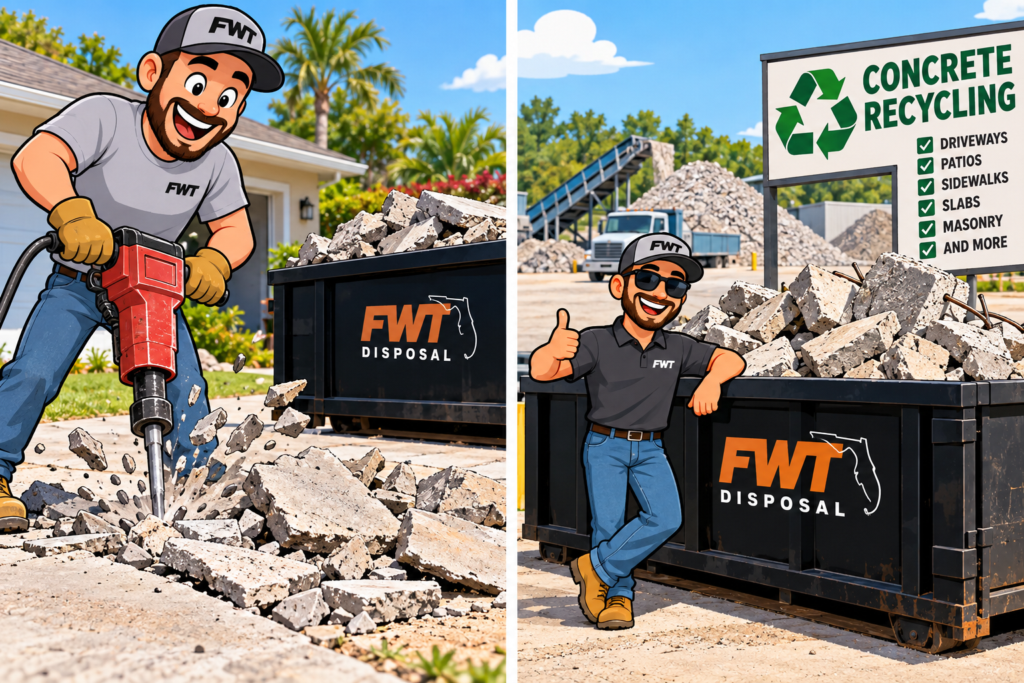
Can You Put Concrete in a Construction Dumpster?
Concrete can be handled in certain dumpster applications, but it requires more planning than most renovation debris.
Concrete is extremely heavy.
A dumpster can reach its weight allowance while still looking only partially full.
Concrete projects may include:
- Driveway removal
- Patio demolition
- Sidewalk replacement
- Slab removal
- Foundation work
- Masonry demolition
This is one of the most important examples of why what can you put in a construction dumpster is not simply a yes-or-no question.
The amount of material matters.
For projects involving concrete, see our guide to Concrete Disposal Near Me in Northeast Florida before ordering.
Can You Put Brick and Block in a Construction Dumpster?
Brick, block, and masonry are similar to concrete because they are very dense.
Typical projects may involve:
- Retaining walls
- Fireplaces
- Brick patios
- Block walls
- Landscaping features
If your project includes large amounts of brick or block, tell the dumpster provider before loading.
For anyone researching what can you put in a construction dumpster, heavy masonry should always be discussed separately from lighter materials such as drywall and lumber.
Can You Put Dirt in a Construction Dumpster?
Dirt and soil can create weight problems very quickly.
Projects that generate dirt may include:
- Excavation
- Landscaping
- Foundation work
- Pool projects
- Grading
- Site preparation
Do not assume dirt can automatically be mixed with construction debris.
If you’re unsure what can you put in a construction dumpster when soil is involved, confirm first.
Can You Put Yard Debris in a Construction Dumpster?
Some home improvement projects produce both building debris and yard waste.
Examples include:
- Fence replacement
- Deck removal
- Landscaping
- Outdoor renovations
- Property cleanup
Whether branches, brush, or other yard debris can be mixed into the same load depends on the disposal requirements.
This is another case where what can you put in a construction dumpster depends on the composition of the entire load.
Can You Put Household Junk in a Construction Dumpster?
Renovation projects sometimes overlap with home cleanouts.
You may be removing:
- Furniture
- Boxes
- Old household items
- Cabinets
- Flooring
- Drywall
- Shelving
Some household junk may be acceptable, but specialty items can still be restricted.
If your project combines a cleanout with remodeling, tell FWT before ordering.
That makes it easier to determine what can you put in a construction dumpster without creating disposal issues later.
What Cannot Go in a Construction Dumpster?
Just as important as knowing what can you put in a construction dumpster is knowing what should stay out.
Common restricted or special-handling items may include:
- Paint
- Chemicals
- Solvents
- Motor oil
- Fuel
- Batteries
- Propane tanks
- Pressurized cylinders
- Pesticides
- Medical waste
- Hazardous materials
- Certain electronics
- Refrigerators
- Freezers
- Air conditioners
- Tires
FWT currently lists paint, chemicals, solvents, asbestos, oil drums, radioactive material, highly flammable substances, explosives, biomedical waste, toxic materials, televisions, refrigerators, freezers, air conditioners, tires, and free liquids among materials it does not accept.
Hazardous Materials Need Special Handling
Construction and demolition projects sometimes uncover materials that should never be treated as ordinary renovation debris.
These may include:
- Solvents
- Chemicals
- Fuels
- Batteries
- Paint products
- Compressed gas cylinders
- Other hazardous substances
If you’re unsure what can you put in a construction dumpster, the safest approach is to separate questionable materials and confirm them before loading.
>>> OUTBOUND LINK GOES HERE <<<
Anchor text: OSHA construction housekeeping standards
Use it in this sentence:
Contractors should also review OSHA construction housekeeping standards, which require construction debris to be cleared from work areas and call for appropriate containers for waste collection and separation.
Outbound URL:
https://www.osha.gov/laws-regs/regulations/standardnumber/1926/1926.25
This outbound link remains different from the Florida DEP and EPA resources used in the other cluster articles.
Can You Put Paint in a Construction Dumpster?
Paint should always be confirmed before disposal.
Different rules may apply depending on:
- Whether it is liquid or dry
- Type of paint
- Quantity
- Local disposal requirements
FWT lists paint among materials it does not accept.
If you’re asking what can you put in a construction dumpster, paint is one material you should not assume belongs in the container.
Can You Put Batteries in a Construction Dumpster?
Batteries can contain hazardous components and should generally be separated from normal construction debris.
Examples include:
- Automotive batteries
- Tool batteries
- Rechargeable batteries
- Equipment batteries
Before deciding what can you put in a construction dumpster, remove batteries from the general waste stream and use an appropriate disposal or recycling option.
Can You Put Propane Tanks in a Construction Dumpster?
Pressurized containers require special handling.
Examples include:
- Propane tanks
- Oxygen cylinders
- Fuel cylinders
These items can create safety risks during hauling and processing.
If you are unsure what can you put in a construction dumpster, pressurized tanks should always be treated as special items rather than ordinary debris.
Can You Put Appliances in a Construction Dumpster?
Appliances need to be checked individually.
Some may contain:
- Refrigerants
- Oils
- Electronic components
- Other regulated materials
Examples include:
- Refrigerators
- Freezers
- Air conditioners
- Washing machines
- Dryers
- Dishwashers
FWT currently lists refrigerators, freezers, and air conditioners among the materials it does not accept.
This is why understanding what can you put in a construction dumpster matters before a kitchen or whole-home renovation.
Can You Put Electronics in a Construction Dumpster?
Electronic waste can have separate disposal requirements.
Examples include:
- Televisions
- Computers
- Monitors
- Printers
- Other electronics
FWT specifically lists televisions among the items it does not accept.
When planning what can you put in a construction dumpster, keep electronics separate unless the provider confirms otherwise.
Be Careful With Older Building Materials
Older homes may contain materials requiring special handling.
Possible examples include:
- Asbestos-containing materials
- Lead-based paint
- Mercury-containing equipment
- Older electrical components
FWT lists asbestos among materials it does not accept.
If you suspect regulated material is present, do not place it into the dumpster.
Understanding what can you put in a construction dumpster becomes especially important on older renovation and demolition projects.
Why Material Separation Matters
Different construction materials behave differently during disposal.
A mixed renovation load may include:
- Wood
- Drywall
- Cabinets
- Flooring
- Packaging
A heavy-debris load may include:
- Concrete
- Brick
- Masonry
- Tile
Knowing what can you put in a construction dumpster can help you decide whether certain materials should be separated rather than mixed into one load.
This can reduce weight issues and make disposal easier.
What Can Go in a Dumpster During a Bathroom Remodel?
Bathroom projects often generate:
- Drywall
- Tile
- Vanity units
- Cabinets
- Flooring
- Cement board
- Fixtures
- Lumber
For bathroom projects, what can you put in a construction dumpster depends partly on how much heavy tile, mortar, and cement board are being removed.
A physically small bathroom can still create a heavy load.
What Can Go in a Dumpster During a Kitchen Remodel?
Kitchen renovation debris may include:
- Cabinets
- Countertops
- Drywall
- Flooring
- Backsplash
- Doors
- Trim
- Packaging
This is one of the most common scenarios where homeowners ask what can you put in a construction dumpster.
Cabinets, drywall, and flooring are typical construction debris, while appliances and specialty materials should be confirmed separately.
What Can Go in a Dumpster During Roofing?
Roofing projects may generate:
- Shingles
- Underlayment
- Flashing
- Nails
- Damaged decking
- Packaging
Roofing material is often dense, so load weight should be considered before ordering.
When determining what can you put in a construction dumpster for roofing, the type and amount of shingles matter just as much as the physical volume.
What Can Go in a Dumpster During Demolition?
Demolition projects can produce a wide range of debris:
- Lumber
- Drywall
- Cabinets
- Flooring
- Roofing
- Siding
- Brick
- Concrete
- Metal
- Fixtures
Large demolition projects should be planned carefully.
The broader the material mix, the more important it becomes to understand what can you put in a construction dumpster before work starts.
Construction Dumpster Materials: Quick Reference
| Material | Typical Consideration |
|---|---|
| Lumber | Common construction debris |
| Drywall | Common construction debris |
| Cabinets | Break down to save space |
| Flooring | Weight depends on material |
| Tile | Heavy |
| Roofing shingles | Dense and heavy |
| Concrete | Confirm before loading |
| Brick | Confirm weight limits |
| Metal | May be recyclable |
| Doors | Common renovation debris |
| Windows | Handle glass carefully |
| Yard debris | Confirm before mixing |
| Dirt | Very heavy |
| Paint | Not accepted by FWT |
| Chemicals | Not accepted |
| Batteries | Separate disposal |
| Propane tanks | Special handling |
| Televisions | Not accepted by FWT |
| Refrigerators | Not accepted by FWT |
| Freezers | Not accepted by FWT |
| Air conditioners | Not accepted by FWT |
| Tires | Not accepted by FWT |
The easiest rule is simple: if you’re not sure what can you put in a construction dumpster, ask before loading.
Avoid Overloading the Dumpster
Even approved materials can create problems if the container is overloaded.
Keep debris below the permitted fill level and distribute weight evenly.
Heavy materials deserve particular attention:
- Concrete
- Brick
- Tile
- Asphalt
- Masonry
- Roofing shingles
If your project includes a significant amount of these materials, tell FWT before ordering.
Knowing what can you put in a construction dumpster also means understanding how much of that material the container can safely carry.
Don’t Mix Unknown Materials Into the Load
If you discover something questionable during demolition, keep it aside.
Examples include:
- Unidentified chemicals
- Old paint
- Pressurized containers
- Batteries
- Possible asbestos
- Industrial products
Do not automatically throw them into the dumpster.
If you’re unsure what can you put in a construction dumpster, identifying the material first is always better than creating a disposal problem later.
What Can You Put in a Construction Dumpster in Northeast Florida?
For projects throughout Northeast Florida, many ordinary remodeling and construction materials can be handled with an appropriate roll-off dumpster.
FWT serves projects across:
- Duval County
- St. Johns County
- Clay County
- Flagler County
- Putnam County
Its residential and commercial services cover renovation, remodeling, construction, roofing, demolition, cleanouts, and jobsite waste.
When you’re trying to determine what can you put in a construction dumpster, describe the actual project and materials rather than simply asking whether construction debris is allowed.
Tell FWT Exactly What You’re Throwing Away
The easiest way to avoid problems is to explain the project before ordering.
For example:
“We’re remodeling a bathroom and removing drywall, tile, a vanity, and flooring.”
Or:
“We’re replacing a roof and disposing of asphalt shingles.”
Or:
“We’re removing a patio and have concrete and brick.”
That information makes it much easier to determine what can you put in a construction dumpster, what size container may be appropriate, and whether any of the materials need separate handling.
FWT currently offers 10-, 15-, 20-, 30-, and 40-yard dumpsters for residential and commercial projects throughout Northeast Florida.
Plan the Debris Before Demolition Begins
Knowing what can you put in a construction dumpster before the project starts can make the entire cleanup process easier.
Ordinary construction materials such as wood, drywall, cabinets, flooring, siding, and approved demolition debris can often be handled efficiently with a roll-off dumpster.
Heavy materials such as concrete, brick, tile, masonry, and roofing need more careful planning because of weight.
Paint, chemicals, solvents, asbestos, televisions, refrigerators, freezers, air conditioners, tires, hazardous waste, and other restricted materials should remain out of FWT containers.
The best approach is to identify the expected debris before ordering.
That way, FWT can help determine the appropriate container and explain any material-specific restrictions before delivery.