When concrete is broken up during demolition, renovation, or construction work, one of the first questions people ask is: where does all that concrete actually go? Unlike household waste, concrete can’t be thrown away just anywhere. Understanding how a concrete dump works — and how proper concrete disposal is handled — can help homeowners and contractors avoid delays, fines, and unnecessary costs.
At Florida Waste & Trailer Disposal, we regularly handle concrete hauling and disposal across Northeast Florida. This guide explains what happens to broken concrete after removal, where it can be dumped, and why professional handling matters.
What Is a Concrete Dump?
It is a designated facility that accepts concrete and other approved construction materials for disposal or recycling. These facilities are different from standard landfills, which often have strict limitations on weight, material type, and contamination.
Concrete dump sites are designed to handle:
- Heavy loads
- Dense materials
- Large quantities of broken concrete
- Clean and reinforced concrete
Some concrete dump locations specialize in recycling, while others focus on approved disposal.
Why Concrete Can’t Go in Regular Trash
Concrete is one of the heaviest materials generated during construction and demolition. Dumping it improperly can lead to:
- Overloaded vehicles
- Rejected landfill loads
- Damage to roads or property
- Environmental violations
Because of its weight and composition, most landfills require concrete to be separated from other debris — or won’t accept it at all. That’s why using a proper concrete dump is essential.
What Happens to Concrete at a Concrete Dump?
Once concrete reaches a concrete dump or recycling facility, it’s processed based on its condition and composition.
Clean Concrete
Clean concrete — free of trash, wood, or insulation — is often crushed and recycled. The recycled material can be reused as:
- Road base
- Drainage material
- Construction aggregate
This process reduces landfill use and supports sustainable construction practices.
Mixed or Contaminated Concrete
Concrete mixed with dirt, asphalt, rebar, or construction debris may require special handling. Some facilities accept mixed loads with restrictions, while others require separation before dumping.
Proper sorting ensures compliance with disposal guidelines and avoids additional fees.
Concrete Disposal vs Concrete Recycling
Not all concrete disposal means landfill dumping. In many cases, recycling is the preferred option when materials meet facility standards.
Concrete recycling:
- Reduces landfill waste
- Lowers environmental impact
- Reuses materials efficiently
- Often costs less than landfill disposal
We evaluate each load to determine whether recycling or disposal is the best option based on local facility requirements.
Guidelines for construction and demolition waste handling are supported by the EPA, which promotes responsible material management.
Who Uses Concrete Dump Services?
Concrete dump services are used by:
- Homeowners removing patios or walkways
- Contractors performing demolition or renovation
- Builders clearing job sites
- Property managers handling repairs or upgrades
Whether the project is large or small, broken concrete needs proper disposal to keep sites safe and compliant.
Can You Take Concrete to a Dump Yourself?
Many homeowners searching for disposal options quickly realize that professional concrete disposal near me services are faster, safer, and more cost-effective than attempting multiple dump runs. Common challenges include:
- Weight limits exceeded
- Inadequate vehicles or trailers
- Rejected loads at the dump
- Multiple trips increasing costs
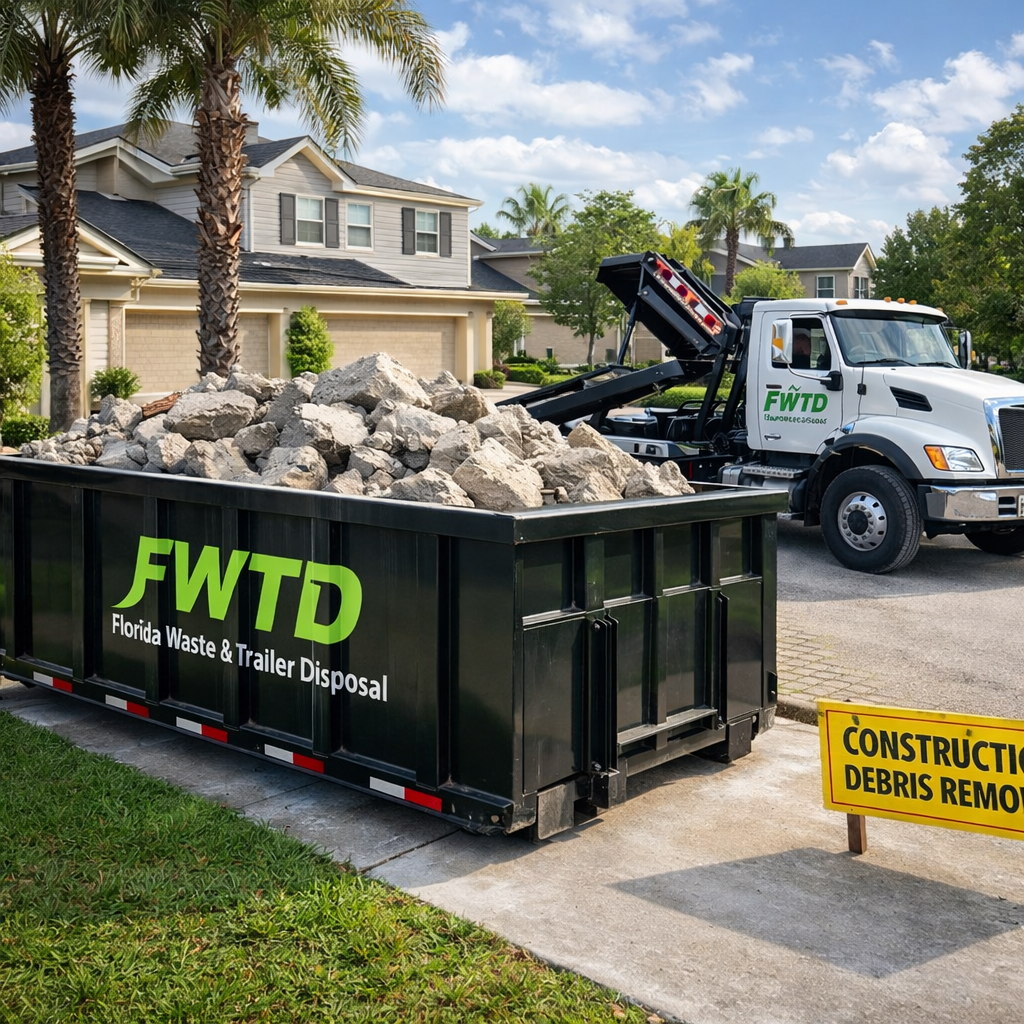
Professional concrete disposal eliminates these risks by handling transport, load requirements, and facility coordination for you.
Concrete Dump Options for Larger Projects
For projects generating concrete over time, there are two common disposal approaches:
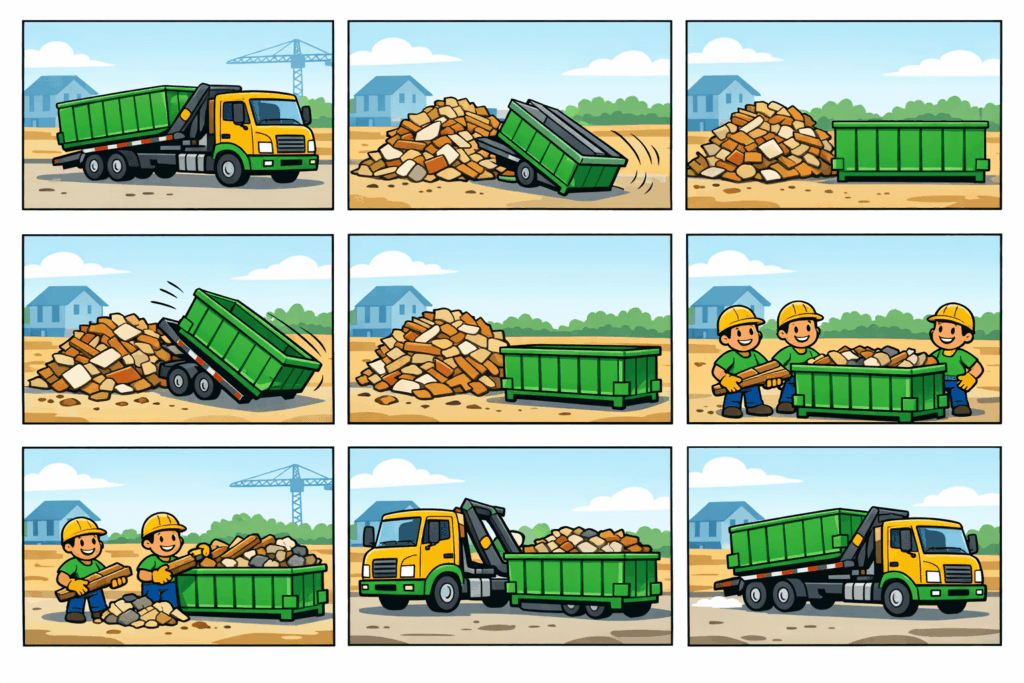
- Full-service concrete removal, where material is loaded and hauled away immediately
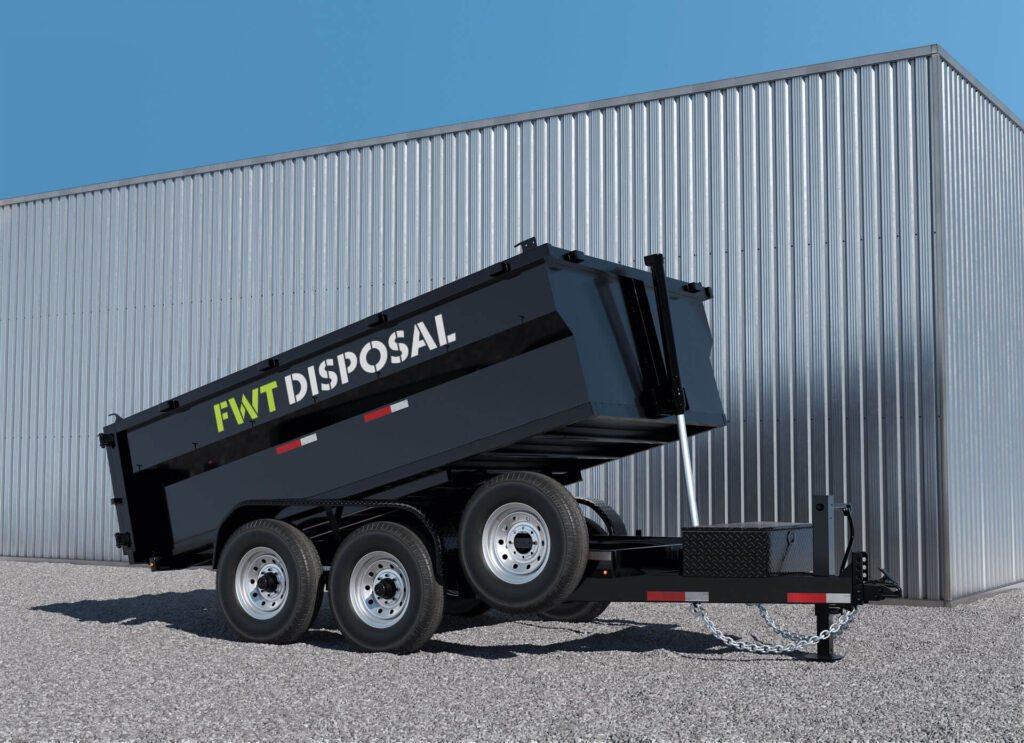
- Dumpster rental, when debris accumulates in stages
For projects involving more than just concrete, combining disposal with construction debris removal and light demolition services often saves time and money.
Why Proper Concrete Dumping Matters
Using the wrong disposal method can lead to:
- Environmental damage
- Local code violations
- Unexpected dumping fees
- Project delays
A proper concrete dump ensures materials are handled safely, responsibly, and in compliance with disposal regulations.
Why Choose Florida Waste & Trailer Disposal?
We help homeowners and contractors navigate concrete dumping and disposal without the guesswork.
What you can expect:
- Experience with concrete dump requirements
- Safe handling of heavy materials
- Access to approved disposal and recycling facilities
- Transparent pricing
- Reliable scheduling
From small concrete removals to larger demolition projects, we make the disposal process straightforward.
Serving Northeast Florida
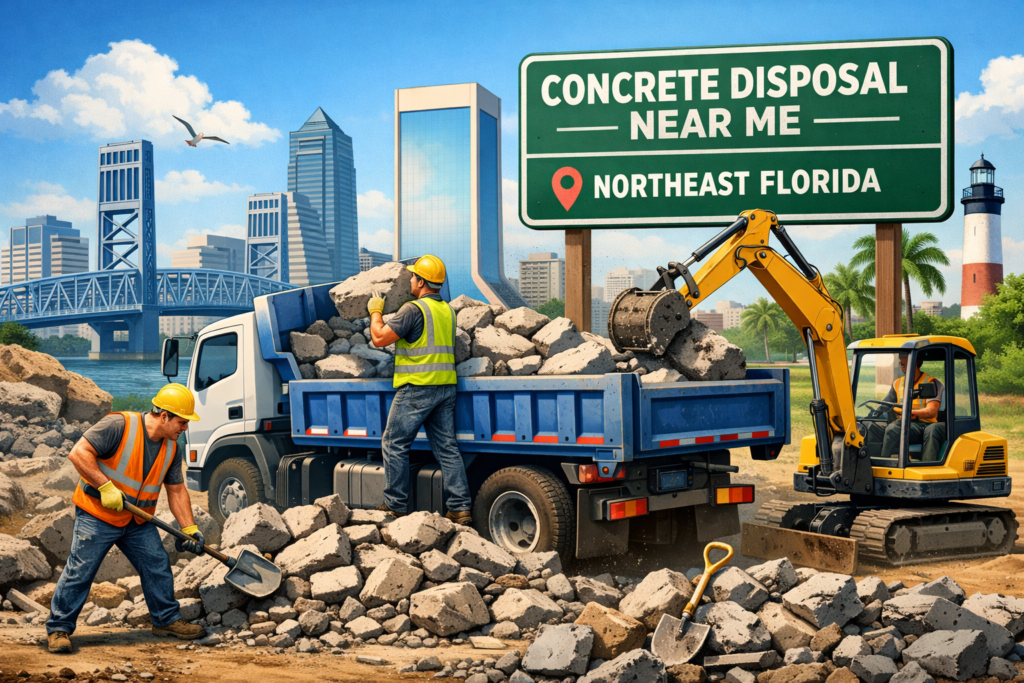
We provide concrete disposal and hauling services throughout Northeast Florida. If your project produces broken concrete, we’re ready to handle proper dumping or recycling.
Need Help With Concrete Dump & Disposal?
If you’re dealing with broken concrete and aren’t sure where it should go, Florida Waste & Trailer Disposal can help. Contact us today to schedule professional concrete dumping and disposal services and keep your project moving forward.